
A pudding for Queen Elizabeth
September 17, 2022 § 1 Comment
This week, I’ve been watching televised queues of people lining the streets of villages, towns and cities throughout Britain waiting to catch a glimpse of the late Queen’s coffin. This is not for me. Instead, I’ve been working up a recipe I started thinking about during the Platinum Jubilee celebrations earlier in the year.
Out of curiosity, I did make that competition-winning Platinum Jubilee pudding featuring in a BBC TV programme, a confection of canned mandarins, lemon jelly, amaretti biscuits and rather showy white chocolate bark shards. It was OK, but suffered from a serious lack of booze. Oh, and I’m sorry but jelly in a trifle is a definite no-no in our household.

I’ve gone down the more warm and comforting route for my pudding. It’s a white chocolate, whisky and marmalade bread and butter pudding with a distinctly Scottish flavour.
I came up with the idea of creating a pudding out of marmalade sandwiches after watching my favourite part of the Platinum Jubilee celebrations – the moment where the Queen entertained Paddington Bear at Buckingham Palace, sharing tea and marmalade sandwiches. Charming or sentimental? You decide but it’s surely preferable to being serenaded by Paul McCartney and Rod Stewart…
The next part of the pudding jigsaw puzzle was being tempted by a white chocolate, whisky and marmalade bread and butter pudding on the menu at The Ceilidh Place, a brilliant gastropub in Ullapool in far north of Scotland. Sadly, they’d sold out when I came to order it on a visit earlier this year so I had to store the idea away until I was able to make it myself.
The pudding idea finally came together when I found the right whisky to cut through the potentially cloying sweetness of white chocolate and marmalade. Adding whisky to food is a tricky business as there are so many wildly contrasting whisky styles from the heavily peated Islay single malts that knock your head off, to smooth Speyside spirits matured in sherry casks that come close to a fine Cognac.
I chose Royal Lochnagar whisky for two reasons. Firstly, it is made in a charming small distillery at Crathie, bang next-door to the late Queen’s Balmoral Estate and has royal warrants dating back to Queen Victoria, Edward VII and George V. Second, it is the perfect complement for marmalade with its candied citrus peel, demerara sugar and spice flavour profile. I’ve been lucky enough to visit both the distillery and Balmoral Castle on separate visits to Royal Deeside. It’s a stunning part of the world and it’s no surprise that the queen chose to spend her final days there.



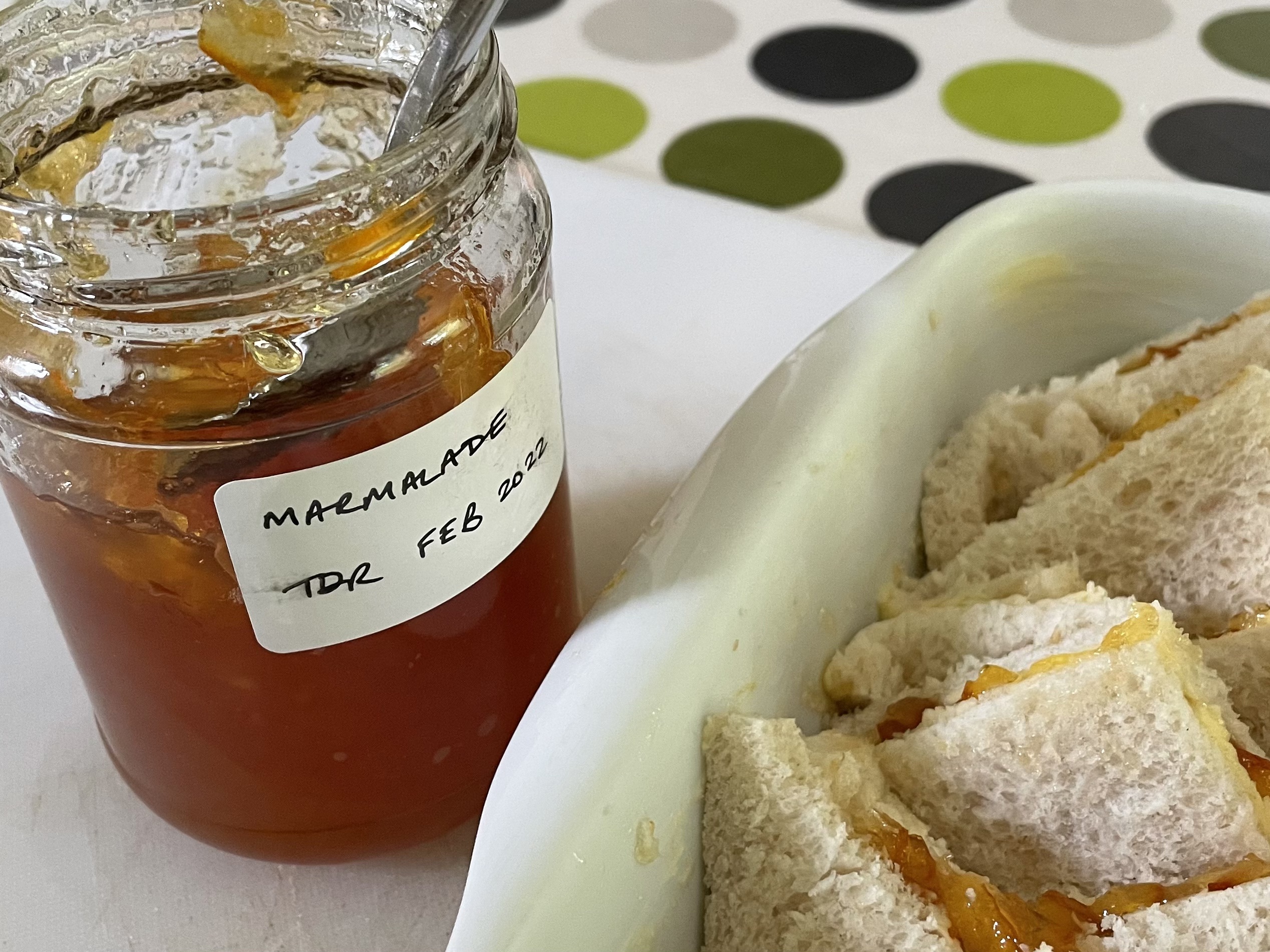

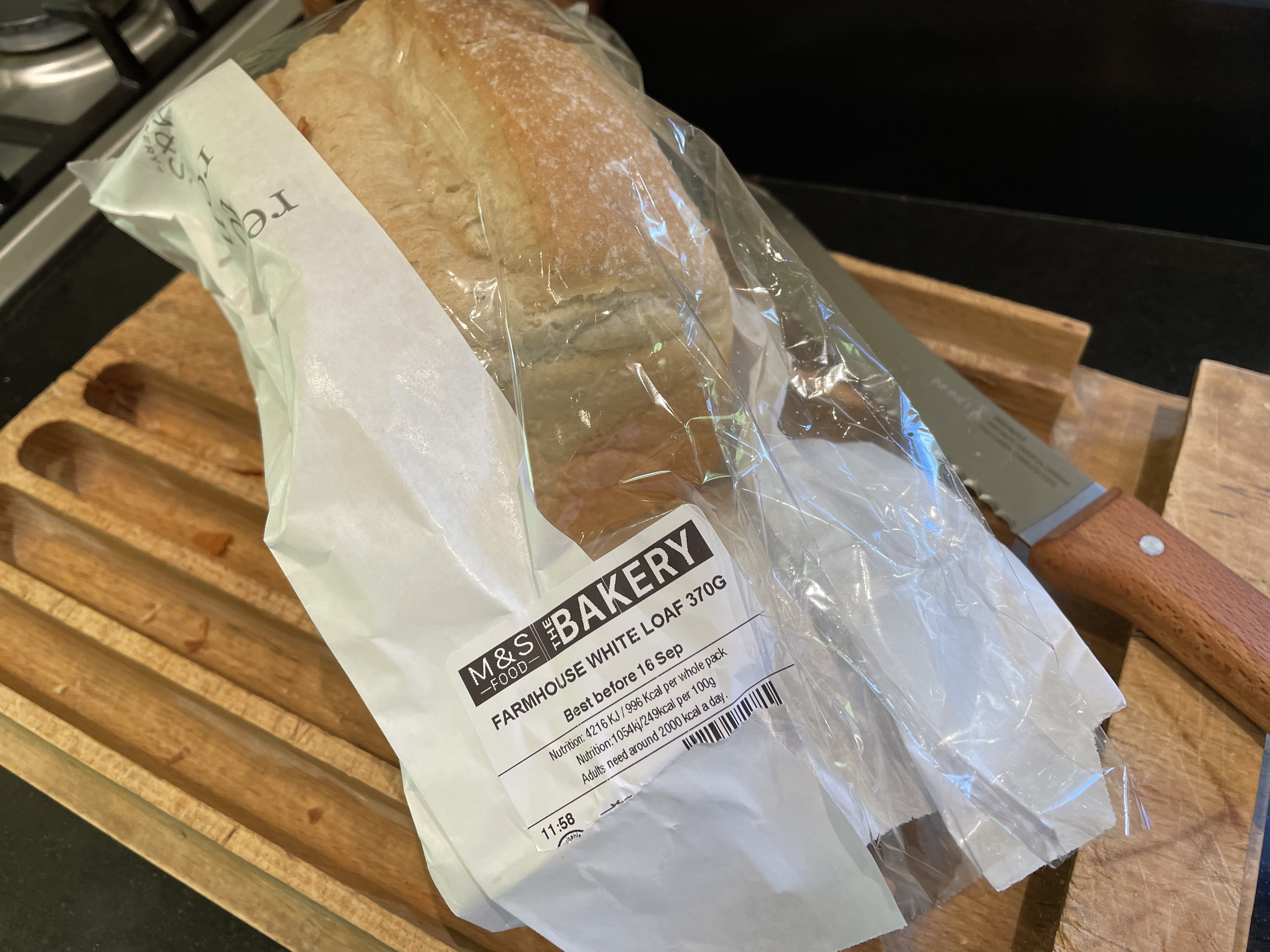
It took a couple of experiments to refine the recipe and make the flavours sing without any one element being too overpowering. This is my end result and it will be gracing my Sunday dinner table tomorrow as the nation prepares for Monday’s state funeral and we collectively have a quiet moment of self-reflection at the end of an era.
White chocolate, whisky and marmalade bread and butter pudding
Serves 6
Ingredients
12 thin slices white bread
Softened butter for spreading on the bread and greasing the baking dish
6 generous tablespoons of your favourite marmalade
150g good quality white chocolate flavoured with vanilla, broken up into squares
425-450 ml whipping cream (or a 300ml pot single cream plus a 150ml pot double cream)
1 teaspoon vanilla extract
1 teaspoon grated orange zest
3 large eggs
4 tablespoons of your favourite whisky (I used Royal Lochnagar)
Begin by cutting off the crusts from the slices of bread, spreading them sparingly with butter then making 6 marmalade sandwiches using 1 tablespoon of marmalade for each sandwich. Cut each round into four tiny triangular sandwiches.
Butter your baking dish generously then arrange the tiny marmalade sandwiches in decorative overlapping rows in the dish. You need a shallow, ovenproof dish for this. I used a square white porcelain dish approx. 22cm by 22cm by 5cm which worked well.
Place the chocolate, cream, vanilla extract and orange zest in a heatproof bowl and set the bowl over a pan of not quite simmering water. Wait until the chocolate has melted then remove the bowl from the heat and stir well to combine. Allow to cool for a couple of minutes.
In a separate bowl or jug, whisk together the eggs and the whisky, then add the egg mixture to the slightly cooled cream and chocolate mixture and whisk well to combine.
Gently ladle the chocolate mixture over the marmalade sandwiches. Use a fork to press down the sandwiches gently so that they are covered evenly with the chocolate mixture. Depending on the size of your bread slices and, you may not need to use all of the chocolate mixture.
Cover the baking dish with clingfilm and transfer it to the fridge for a minimum of 24 and ideally 48 hours.
Preheat your oven to 170 degrees C fan. Remove the clingfilm and bake the pudding for 30 minutes until the top is crunchy but the interior is still soft and yielding. Leave to stand for 10 minutes before serving with cold cream and maybe a few berries.
More Proper Puddings – Individual Spotted Dicks
March 5, 2013 § Leave a comment
It was back in February 2010 that I last wrote about good old-fashioned English puddings so it’s high time I returned to the subject. Yes I know it’s March now so technically we’re in what the Met Office calls Spring but looking out of the window this morning there’s a sharp frost on the ground so a warming suet pudding would still be very welcome.
I have a weakness for traditional suet puddings which have an undeserved reputation for heaviness. Carefully made, ideally with freshly grated beef suet rather than Atora, they can be beautifully light.
Tracking down an authentic Spotted Dick recipe from my quite extensive collection of recipe books proved surprisingly tricky. After leafing through Mrs Beeton, Jane Grigson, Delia, Prue Leith et al I’d drawn a blank. The only recipe named Spotted Dick I could find was in my trusty battered old copy of The Good Housekeeping Cookery book. This very simple recipe includes just suet, flour, breadcrumbs, currants,milk to bind and a flavouring of grated lemon peel. It’s shaped into a neat roll shape, enclosed in greaseproof paper and foil and steamed for 2 hours.


The traditional roll-shaped pudding worked just fine but I was after something a little daintier and more appealing to a suet pudding first-timer. I tried the same mixture shaped in individual pudding moulds first steamed and another batch water-bath baked for just an hour. This didn’t work half so well and in the case of the baked pudding was really quite unpleasant – stodgy and oily. I concluded that long steaming to allow the ingredients to meld properly was important.
I then sought inspiration from 2 further places – 1) the ingredients list on the pack of Marks and Spencer individual Spotted Dick puddings (yes,really, and rather good too!) and Mrs Beeton. Mrs Beeton may not have a pudding called Spotted Dick but she does list countless different suet puddings many of which contain eggs and more flour than my recipe.
After a little tweaking and experimentation (adding eggs and more milk to give a softer batter-like texture, increasing the flour, soaking the currants in cold tea overnight to make them beautifully moist, adding a little ground allspice to lift the flavour) I came up with my own recipe below which I think is a winner and can hold its own with its Marks and Spencer counterpart both in terms of appearance, flavour and texture:
Don’t forget to serve with plenty of proper custard!
Recipe for Individual Spotted Dicks
Adapted from a recipe in “The Good Housekeeping Cookery Book”. Makes 7
Ingredients
150g plain flour
3 level teaspoons baking powder
150g fresh white breadcrumbs
112g suet
210g currants soaked for several hours or overnight in tea
75g golden caster sugar
level teaspoon ground allspice
grated rind of 1 and 1/2 lemons
2 medium eggs, beaten until lightly frothy
75ml-125ml milk (3-5 tablespoons) to mix to a soft dough consistency
1. Lay out 7 individual pudding basins in one or two large lidded casseroles or saucepans. There’s no need to grease as the suet will do this for you as it melts during steaming. I use Lakeland foil disposable basins available in packs of 50. Preheat an oven to 160 degrees C if you plan to steam in the oven.
2. In a mixing bowl stir together thoroughly the flour and baking powder. Add the crumbs, suet, sugar and lemon rind to the bowl and stir to mix.
3. Add the drained currants, beaten eggs and 75ml (3 tablespoons) milk. Stir until well blended adding a little more milk if necessary until you achieve a soft dough consistency.
4. Divide the mixture between the pudding basins, placing them back in the steaming pan. Cover each one tightly with foil. You can judge whether the basins are equally filled either by eye or more accurately by weighing them on some digital scales. My filled basins weighed 140g each including the 4g weight of the empty foil basin ie the weight of mixture was 136g each.
5. If you’re steaming in the oven, place the pan in the oven then fill with boiling water from the kettle to come half way up the sides of the puddings. If you’re steaming on the hob, again place the pan in position and add boiling water from the kettle.
6. Steam for 2 hours. Turn out (you may need to run a knife round the edge of the basis first) and serve with lashings of proper custard.
Proper Puddings
February 6, 2010 § Leave a comment
Last week’s Radio 4 Food Programme was devoted to one of my favourite things, British puddings. The programme was a joy to listen to, almost as good as eating the puddings themselves.
http://www.bbc.co.uk/programmes/b00q9k53
I was pleased to hear Jane Grigson’s English Food quoted, and also to have my previous assertion about the origins of Sticky Toffee Pudding corroborated. You can read about it in my post https://rhubarbfool.co.uk/2009/08/08/return-to-the-home-of-sticky-toffee-pudding-8-august-2009/
Mary Norwak, author of “English Puddings Sweet and Savoury” was featured on the programme. I’d heard of her books but never before heard her interviewed. I’m afraid she was rather a disappointment. She came across as rather distant and snooty and her comments on trifle made me quite angry. We all have our differing views as to what should go into a trifle, but surely this is a matter of personal preference. As far as I’m concerned, if you like it, put it in. Mrs Norwak has no right to look down on anyone else simply because of what they like to put in their trifle. I didn’t feel inclined to buy her book after listening to her.
Nevertheless, still inspired by the programme as a whole, I thought I would give the recipes for two of our favourite traditional puddings at home, Guards’ Pudding from Margaret Costa’s classic Four Seasons Cookbook, and Lemon Layer Pudding (which is sometimes also referred to as Lemon surprise Pudding or Delicious Pudding). This particular version is from the Good Housekeeping cookery book – a comprehensive and reliable cook book let down by a terrible index – try finding apple crumble and you’ll see what I mean. It’s listed idiosyncratically under F for fruit (but not under A for apple, C for crumble or even P for pudding).
The list of ingredients for Guards’ Pudding is unprepossessing – brown breadcrumbs, bicarb, jam, sugar, butter and egg (no flour). As the pudding steams, a marvellous alchemy takes place and the end result is moist, light and delicious. I think it’s best served with proper custard. You can buy really good ready prepared egg custard now from Marks & Spencer, Sainsbury’s and Waitrose to name but three supermarkets. This is a great help for the busy cook preparing Sunday dinner which is the preferred meal of the week for a pudding.
Culinary alchemy of a different kind results in the lemon layer pudding mixture separating into a light sponge and lemon sauce after being gently baked in a water bath.
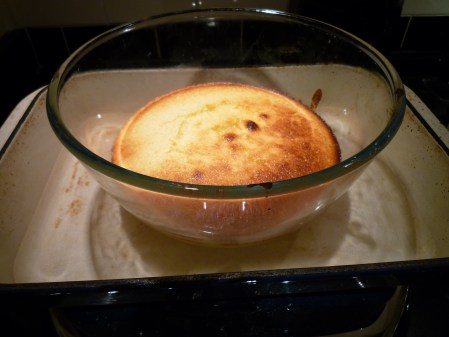
Here’s the pudding fresh out of the oven luxuriating in its hot water bath:
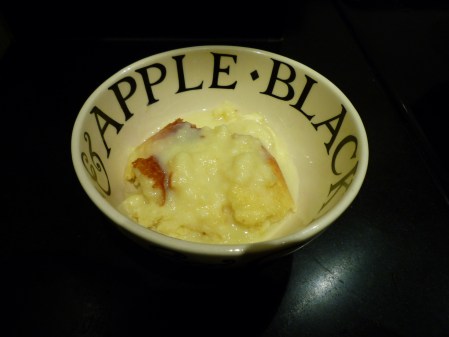
And here is a picture showing the pool of lemon sauce that magically appears during baking. All it needs now is a spoonful of extra thick single cream to set off all that lovely lemony sharpness.
Recipe for Guards’ Pudding
From The Four Seasons Cookery Book by Margaret Costa. Serves 4.
Ingredients
4 oz (115g) butter
4 oz (115g) soft brown sugar
3 tablespoons (45 ml) raspberry or strawberry jam
4 oz (115g) fresh brown breadcrumbs (some crust left on is OK)
2 eggs
1/2 teaspoon bicarbonate of soda
butter for pudding basin
Cream together the butter and sugar until fluffy, and blend in the jam. At this point, the mixture will be a disgusting pink colour but don’t worry. Add the breadcrumbs, the beaten eggs and the bicarbonate of soda dissolved in a very little warm water. Mix well, turn into a buttered pudding basin and steam for 2 to 2 and 1/2 hours. Set the basin in the lowest possible oven for a few minutes before turning out and then, if you can wait, let it stand a minute or two longer to firm it.
Recipe for Lemon Layer Pudding
This recipe comes from The Good Housekeeping Cookery Book. Serves 4.
Ingredients
grated rind and juice of 2 lemons
2 oz (50g) softened butter
4 oz (100g) golden caster sugar
2 eggs, separated
2 oz (5og) self raising flour
1/2 pint (300ml) milk
Grease a 2 pint (1.1 litre) capacity ovenproof dish. A white porcelain soufflé dish looks clean and elegant if you have one. Cream together the lemon rind, butter and caster sugar until pale and fluffy. Beat in the egg yolks one by one, then the flour, continuing to beat well to combine. Whisk the egg whites until stiff. Fold a tablespoon or so of the whisked egg whites together with the lemon juice and a little of the milk into the mixture. Continue in this way with the milk and egg white until it is all incorporated into the mix. It will look like a cake mix which has gone badly wrong at this stage – runny and curdled. Don’t worry, this is how it’s meant to look. Pour the mixture into the greased baking dish, then stand the dish in a shallow tin of cold water (a roasting tin is ideal) and bake in the oven at 180 degrees C (350 degrees F or gas mark 4) for about 45 minutes or until the top is golden brown, set and spongy.
If you have any traditional British pudding recipes you’d like to share, I’d love to hear from you – please send me a reply.
 The Rhubarb Fool