
Swiss Cheese
August 19, 2010 § 1 Comment
Swiss cheese is much in evidence at the show dairy in the hamlet of Pringy on the outskirts of the village of Gruyères in Western Switzerland. And I don’t just mean the vast wheels of the stuff in the maturing cellars. There’s lots in evidence in the twee on-site restaurant and most of all in the knick-knack laden gift shop.
Picture-perfect Gruyères with its castle, quaint winding streets and Maison de Gruyère show-dairy is definitely a tourist magnet. On the day of our visit it was overrun with visitors of all nationalities including two improbably grown-up and portly troupes of boy scouts. We duly joined the queue for tour and museum tickets and after a short wait we were taken step by step through the story of the cheese. It all starts here with the alpine pasture:
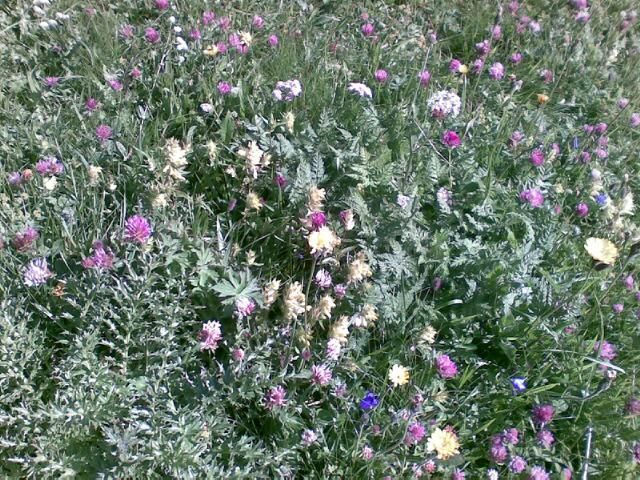
Well it does and it doesn’t as only the specially designated Gruyère d’Alpage is made in the summer from the milk of cows grazing the high mountain pastures. Just 56 dairies produce 400 tonnes per annum of this rare commodity whereas a total of 200 dairies produce 27,500 tonnes per annum of Swiss AOC (Appellation d’Origine) gruyère. Talking of AOC gruyère, the museum maintains a dignified silence on the subject of so-called French gruyère. The French cheekily awarded their own product national AOC status back in 2001 and subsequently went a step too far going for Europe wide PDO (protected designation of origin) status. Earlier this month the European authorities, quite correctly in my view, threw out the French claim. It’s a bit rich the French trying to protect their own so called gruyère cheese when they come down like a ton of bricks on smalltime producers of elderflower champagne…
Back to the genuine article. Swiss AOC gruyère can only be produced in a relatively small area centred around Gruyères itself within the cantons of Fribourg, Vaud, Neuchâtel and Bern. The milk comes not from what I think of as a traditional Swiss light brown cow but from the black and white or reddish-brown and white Fribourg breed. Each cow eats an astonishing 100kg of grass per day and produces as a result just 25 litres of milk. The traditional 35kg round of cheese is made from a generous 400 litres of milk. At the show dairy, they work with vats holding 4,800 litres of milk to produce 12 cheeses at a time. The morning milk is added to the previous evening’s milk (which has been stored overnight at a temperature of between 15 and 18 degrees C) before the cheesemaking process begins.
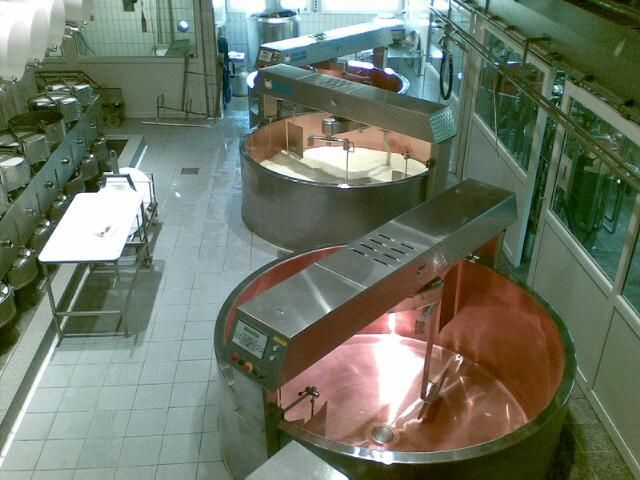
Gruyère cheese is often described as unpasteurised, but as the museum visit makes clear, the milk is gently heat-treated (to 57 degrees C compared to the 71 degrees C of the pasteurisation process) during the production of the cheese. The milk (presumably skimmed to remove the luscious Gruyère crème double much fêted in this part of Switzerland) is first heated to 32 degrees C before adding a natural starter culture (lactic acid fermentation agent in whey) and subsequently animal rennet. The starter culture matures the milk and the rennet causes it to coagulate into a mass. The coagulated milk or curd is then cut using large blades into small pieces. Judging the exact moment to begin the cutting is reckoned to be the trickiest part of the whole process.
The cut curds are then heated to 57 degrees C until the mixture becomes elastic and firm to the touch and the cut curds shrink to the size of small peas. At this point the whey is drained off and the curds ladled into moulds and pressed to form the virgin gruyère cheeses.

The fresh cheeses, vulnerably pliable at this stage, are soaked in a 20% brine solution which gives the cheese half of its ultimate salt content. Finally, the cheeses are placed on shelves of untreated pine (picea abies, the Norway spruce aka the Christmas tree) and left for a lengthy maturation process at a constant temperature of 13 to 14 degrees C. The cheeses are turned daily and brushed with salt solution as they mature. This no doubt used to be carried out by hand but the ever-ingenious Swiss have devised a robot to carry out this repetitive task. There is a certain fascination to be had watching the robot progress up and down the aisles of cheese.
5 to 6 months’ maturation produces a doux (mild) cheese; 7 to 8 months’ a mi-salé; 9 to 10 months’ a salé; +10 months’ a réserve; and finally 15 months’ a vieux. Older is not necessarily better in my book and I rather enjoyed the mild flavour of the youngest gruyère. Visiting the show dairy is a multi-sensory experience and helpfully you are given samples of 3 different ages of cheese to taste the difference. They become progressively more intense and savoury as they age.
You’re not normal if at this stage you haven’t developed an intense salivating urge to buy more cheese to take home. Might I suggest that you restrain yourself from joining the horrendous crush in the end-of-tour store and take a stroll up a grassy hill in the direction of the town of Gruyères itself. On the way, you will pass this traditional farmhouse:
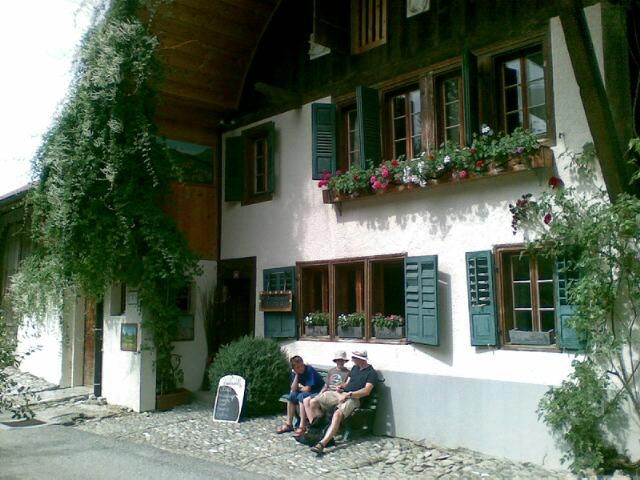
Ring the bell and the farmer’s wife will cut for you a wedge of authentic Gruyère d’Alpage. She also sells the fresh whey cheese known as sérac, a by-product of the gruyère cheese making process. This is what the local farmers used to eat themselves as the gruyère itself was far too lucrative a commodity for home consumption.
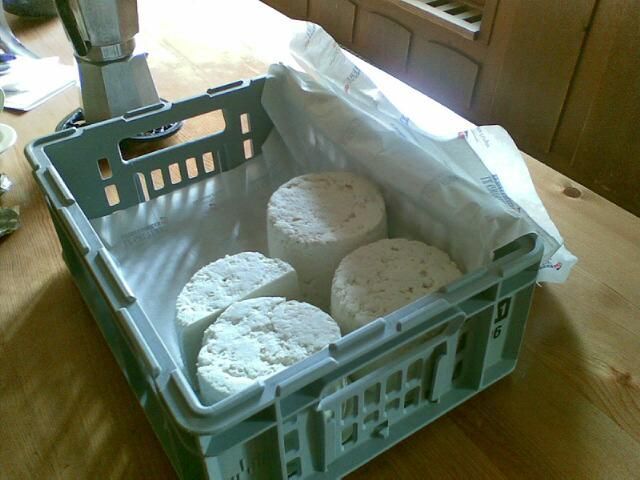
I initially thought that sérac must be a marketing man’s invention to make a plain cheese more enticing with a mountain-themed brand identity. A sérac is, as any mountaineer will tell you, the name of the rough ice lumps that form when a glacier undulates. It transpires that it’s the other way round. The cheese was named sérac first, with a possible derivation from the Latin word for whey, serum, and the glacial formation was named after the cheese in a fit of whimsy.
The farmer’s wife suggested eating the sérac as it came with salt, pepper and fresh herbs or using it as a cooking ingredient. I found a handy recipe for cooked sérac posted on the www.genevalunch.com website on 15 March 2010 by Jonell Galloway.
Finally, if all this sounds too touristy for you, how about a day’s foraging for wild plants in the lush Fribourg countryside? I saw an enticing little flyer for just such an adventure pinned up on the Maison de Gruyère noticeboard but didn’t have the time to take up the opportunity. The lady leading the foraging walks is Christine Brinkerhoff-Meier tel 00 41 (0)26 928 1429 ortieenfolie@hotmail.com. The tours run from 9.00 till 16.00 on Wednesdays, Saturdays and Sundays during the summer months.
L’Artisan du Chocolat arrives in Manchester
April 25, 2010 § Leave a comment
Just as the chocolate fest which Easter has become is finally over, L’Artisan du Chocolat go and open a concession in Selfridges Manchester store!
Despite the name, L’Artisan du Chocolate is a British company founded by Gerard Coleman and make chocolates to die for. Like most people, I enjoy chocolate but wouldn’t call myself a chocoholic. These chocolates though are something else. I was first introduced to them by my friend Shelley who gave me a box as a new year gift two years ago. Now I make a bee-line for their Sloane Street store when I visit London. The good and bad news is that 1) I don’t have to any more as theyr’e much closer to home 2) they are both incredibly moreish and on the pricey side – but those two factors do cancel each other out.
On display when I visited was this rather magnificent chocolate elephant. He’s not solid chocolate but apparently has a polystyrene core and is spray painted with real chocolate using car production line technology. Fancy that.

I was immediately drawn to L’Artisan’s gleaming chocolate pearls – pearlised shells in white or dark chocolate with a soft ganache filling. If you buy a sufficient quantity, they package them in gorgeous little jewelry-type coffrets. I was only the market for a small quantity so had to content myself with a cellophane bag.

Here are my precious purchases – the aforementioned pearls, a couple of bars in unusual flavours (white chocolate with saffron; dark chocolate with Darjeeling tea) plus a tasting box which I’ve been working my way through, one divine chocolate per night after dinner with a cup of espresso. Quality not quantity.
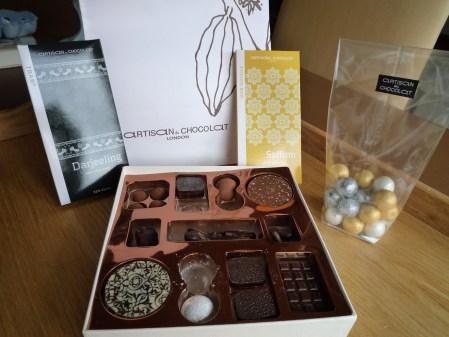
Sof far, my favourites are the signature liquid salted caramel balls also the wondrous thin discs filled with either passionfruit coulis or apricot and tonka bean coulis.
Selfridges food customers are rather fickle – the fresh fish and meat counters soon disappeared as did the cheese counter. Let’s hope Artisan du Chocolat can stay the course.
And they’ve brought out a range of election chocolate buttons too bearing tongue-in-cheek slogans so you can stay topical and enjoy your chocolate at the same time.
http://www.artisanduchocolat.com/ArtisanduChocolatSite/pages/home/default.asp
Contact details
http://www.artisanduchocolat.com
L’Artisan du Chocolat – flagship London store
89 Lower Sloane Street
London SW1 8DA
0845 270 6996
Manchester – Selfridges concession store
1 Exchange Square
M3 1BD
Where to shop in the Forest of Fontainebleau: Nemours, Larchant and La Chapelle
April 23, 2010 § Leave a comment
We’ve been coming to this area of France for the past 15 years now and I’ve managed to build up quite a little black book of food addresses. It’s time to write them down and share them which will be quite a magnum opus. If you happen to be staying in a gîte nearby, please don’t just rely on the supermarket but give these places a try.
I’m going to start not with Fontainebleau itself but with Nemours and its nearby villages of Larchant and La Chapelle. After all Larchant is the village we’ve been based in for the last few years thanks to our friends Alex and Elin who’ve bought a house in the village.
Nemours is a substantial market town on the Loing, a tributary of the Seine. Despite its castle and imposing church it’s a straightforward workaday sort of place not on the tourist trail and none the worse for that. The heart of the town is its marketplace. Perversely the twice-weekly market (Wednesdays and Saturday mornings – a good range of fresh food stalls) is no longer held here but in the Champ de Mars, an open area by the riverside.
The market may have moved on but the old marketplace is home to some great food shops. Let’s start with Chaffraix, the cheese and poultry shop:

This is the place to come if you want to try Brie which is the local cheese in this reqion. You will be spoilt for choice:

Next stop is Aujard Aufradet’s butcher’s shop also in the marketplace where you can have your meat prepared by a real craftsman. The guy is an absolute whizz with his boning knife and that fine string that French butchers like to use.

Keep walking just a little longer to complete your meal with a fruit tart from the best bakery in Nemours, La Fontaine Gourmande:
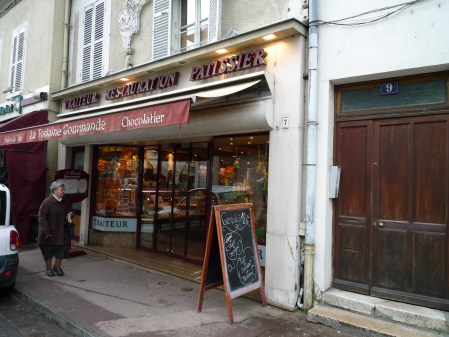
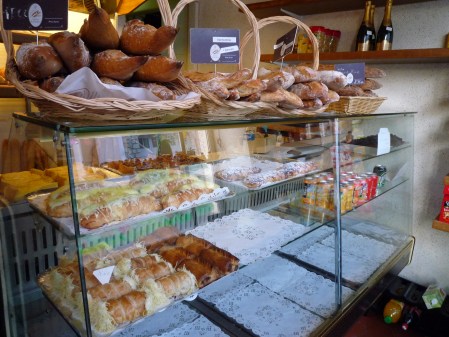
They have a handy little café at the back where, after your morning shopping, you can enjoy a cup of coffee and one of their incredible Bostock pastries. I haven’t found the intriguingly named Bostock anywhere else – I’m sure there’s a story behind this somewhere that I will have to look into sometime. It’s an absolutely deliciously buttery almondy affair:

And if you really do need a supermarket, your best bet is Carrefour Marché on the west side of town in the suburb of Nemours St Pierre.
Next stop is the picturesque village of Larchant a few miles outside Nemours. There’s a great local bakery here:

I like their brown Campagrain bread once I’ve had my fill of baguette à l’ancienne. The almond croissants they do are a breakfast treat but you need to get there early as they sell out fast.
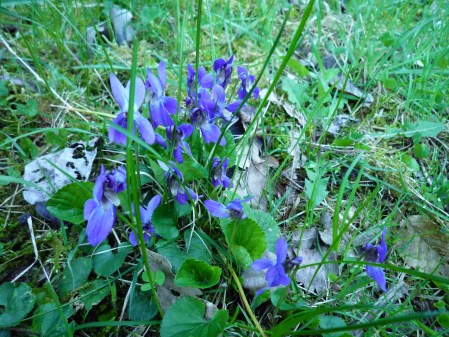
And if you are into foraging for wild food the nearby forest is awash with wild violets at this time of year. They have a shy but distinct taste and make a pretty addition to a salad – just be sure to leave out garlic in your salad dressing which will otherwise overpower their delicate flavour. One year I will definitely try my hand at crystallising some for cakes and chocolate puddings.
Last port of call is the village of La Chapelle la Reine, a village in the midst of prairie-like fields on the plateau beyond Larchant. It’s home to an Atac supermarket, a convenience store and a couple of OK bakeries – useful when the Larchant bakery takes its weekly day off. There is a weekly market too but it’s sadly nothing to write home about.
Clearly signposted from the main road on a handwritten chalk board is a farm shop selling potatoes and all your onion family requirements (onions, shallots and garlic).
That’s it from the Forest of Fontainebleau for this year – I’ll continue with my shopping round-up after our next visit, Easter 2011.
If you know anything more about the mysterious Bostock pastry or if you have tips on crystallising your own violets I’d love to hear from you…
Pilgrimage to Chartres… and another twist on macaroons
April 22, 2010 § 2 Comments
We took a day out from our usual walking and climbing routine in the Forest of Fontainebleau to make the one hour drive west to Chartres. Chartres is dominated by its glorious gothic cathedral which soars out of the plains and can be seen from miles away. Here it is on a beautiful spring morning:

The grandeur of the building, the intricate carving throughout, the stained glass and the view from the belltower were all uplifting. Only the noise (I can’t bring myself to call it music) in the nave as we entered the cathedral marred our visit: a church service was in progress conducted by a guitar playing and singing group, loudly amplified and execrable. There was no-one attending the service but the performers themselves. More than a little self-indulgent.
After a visit to the cathedral, the modern-day pilgrim can take refreshment at the Bistrot de la Cathédrale. Despite its proximity to the cathedral (No 1, Cloisters Tel 00 33 (0)2 37 36 59 60) this is no mere tourist trap but an outpost of Chartres highly regarded “Le Georges” restaurant within the Grand Monarque hotel (22 Place des Epars Tel 00 33 (0)2 37 18 15 15).
Our visit was on Easter Monday so most shops were closed but we still had chance to wander through the streets. Chartres has a beautiful market hall:

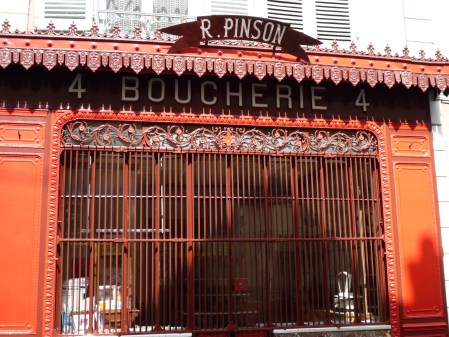
And I spotted this wonderful old-fashioned butcher’s in the old town:
In terms of regional specialites, local pâtisseries sell sweets called Mentchikoffs. These are praline in a crispy meringue coating and were invented in 1893 to celebrate the Franco-Russian pact of that year. The white meringue poetically represents Russian snow. There’s also Pâté de Chartres made from mixed game birds served either en croûte or from a terrine. Another speciality as is the French classic Poule au Pot (pot roast chicken). King Henri IV who famously wanted to put a Poule au Pot on every table in France was the only king to be crowned at Chartres hence the connection.
I was mistaken in thinking that the green and yellow Chartreuse liqueurs are from Chartres – the liqueur is made by Carthusian monks in Voiron near Grenoble. The drink local to Chartres is the beer “L’Eurélienne”. Sadly there was no opportunity to drink some that day.
So that’s almost it for my quick gastro-tour of Chartres. I think it would be a fantastic place to be whisked away for a weekend – wonderful architecture, places to eat and drink and not overrun with tourists.
But before I finish I have to mention these macaroons spotted in the window of a pâtisserie:
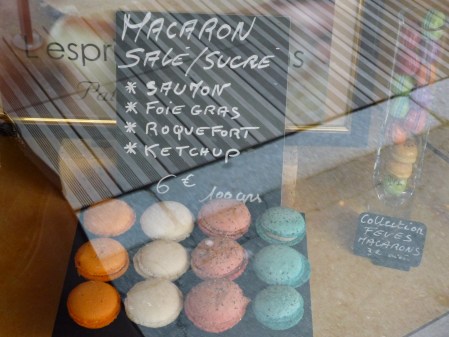
Your eyes are not deceiving you. These are sweet/savoury macaroons and the flavours on offer really are salmon, foie gras, blue roquefort cheese, and, to cap it all, tomato ketchup! This isn’t witty, it isn’t clever, it’s just yucky.
Treats from Dalloyau in Paris… and yet more macaroons
April 21, 2010 § 2 Comments
I made a flying visit to Paris during our Fontainebleau-based week over the Easter holidays. It’s an easy train journey of just under an hour on the commuter service from Fontainebleau-Avon station to the magnificent Gare de Lyon.
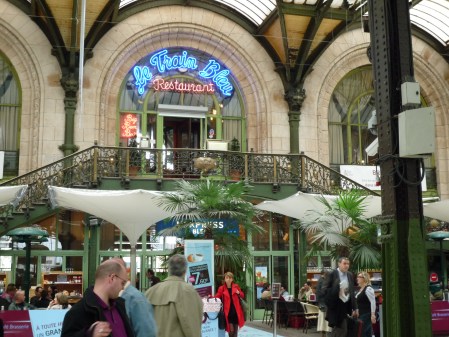
One day I will make a proper visit to the Train Bleu bistro and restaurant within the station but for now I’m just content to look:
After taking in lunch and a visit to the Chopin exhibition at the Cité de la Musique way up in Paris’ north-eastern corner, I decided to hop off the metro 2 stops early and walk back to the Gare de Lyon in the hope of taking in some gastronomic sensory experiences along the way. Bizarrely, most of the district I chose to walk through seemed to be a mecca in shopping terms for either motorbike or DIY enthusiasts. I finally struck gastro-gold in the form of august Parisian pâtisserie Dalloyau as I walked down the Boulevard Beaumarchais on the approach to the Place de la Bastille:

Here’s the elegantly simple window display which was stopping people, not just me, in their tracks:

The classic French Opéra cakes in the window looked absolutely stunning – sleek, glossy dark chocolate squares with a discreet flash of gold leaf. Given the shop’s proximity to the Bastille opera house, home to the Paris opera since 1989, I just had to have one.
Inside, the shop has the hushed spare opulent feel of a designer jewelry store, complete with security guard and cashier’s office. While I waited for my precious cake to be taken from the window display and packaged in the covetable burgundy Dalloyau bag, my eye was caught by a display of, you guessed it, yet more macaroons:

Browsing the rather lovely Dalloyau spring collection brochure (it really is like couture) I see that Dalloyau claim to have their own 300 hundred year old secret macaroon recipe. That would suggest a date of 1710 which would, if strictly true, make their macaroons a century older than the Ladurée ones. There is clearly scope for some historical research here. The brochure also says that the special recipe is lower in sugar and higher in their own almond paste to give a more flavoursome macaroon. They also make a big deal about using only natural plant derived colours and also the ultra freshness of their macaroons. Also for the record, their permanent collection of flavours is as follows: chocolate, coffee, caramel, vanilla, pistachio, raspberry, earl grey tea, Cognac and lemon. Clearly I had to put Dalloyau’s macaroon claims to the test.
Here is the little box of macaroons I brought home with me. I chose raspberry, pistachio, chocolate and salted butter caramel flavours:

And here is my gorgeous Opéra cake:
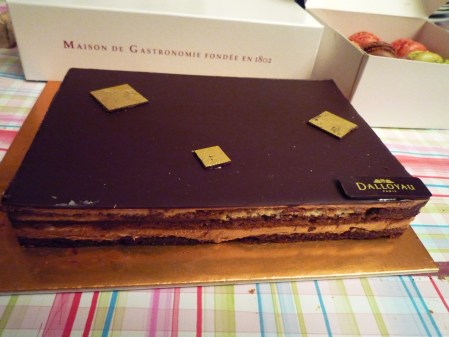
A little research revealed that Dalloyau is a fair-sized business: there are 7 more branches in Paris as well as the one I visited. The business has a long history having been founded back in 1802 by a canny former baker to the royal court. Post-revolution, he correctly thought that the bourgeois populace of Paris would want to have a taste of what had previously been reserved for the aristocracy. He clearly took Marie-Antoinette’s dictum “let them eat cake” seriously. Not only that but Dalloyau was the inventor of the classic French opéra cake which my Larousse tells me is a “cake composed of biscuit Joconde (almond sponge) soaked in strong coffee syrup and layered with coffee buttercream and chocolate ganache. An Opéra, whether an individual or larger cake is always rectangular and 3 cm thick. The top is covered with icing decorated with gold leaf on which the word “Opéra” is written.”
Back home I noticed an article on the firm not in a food publication in Real Deals, a private equity magazine. Paris-based Perceva Group has just acquired 50% of the company which has been struggling financially lately. The following Financial Times article of 19 March 2010 is informative:
http://www.ft.com/cms/s/0/b334c138-339b-11df-9223-00144feabdc0.html
Who would have thought that a chance visit to a cake shop could provoke a history lesson and an insight into the world of economics!
Back to the real question, what did the stuff taste like? I didn’t expect to be bowled over by the macaroons but they really were a cut above – the pistachio ones were a much more delicate shade of green than the Cassel ones (see my previous post of 21 April 2010) and tasted fresh and intensely nutty. The same was true of the raspberry ones – they delivered a real fruit hit. From now on these are the benchmark.
As for the Opéra, served in dainty pieces, this was a divine after dinner morsel, an ultra-sophisticated version of the more rustic Italian Tiramisu.
The only remaining question is can a bunch of private equity investors really run a cake shop?
Contact details
Dalloyau flagship store
101, rue du Faubourg St Honoré, 75008 Paris
00 33 (0)1 42 99 90 00
Dalloyau Bastille
5, boulevard Beaumarchais, 75004 Paris
00 33 (0)1 48 87 89 88
Fontainebleau’s best pâtisserie… and more macaroons
April 21, 2010 § Leave a comment
Fontainebleau, 35 miles south east of Paris, is dominated by the vast palace where the kings of France took their rest and relaxation. It is also home to Patricia Highsmith’s anti-hero, the charming but dangerous Tom Ripley. In the town’s centre, you will find a vast marketplace, the imposing Baroque St Louis church and a range of chic shops clustered in the cobbled streets of the old town.
But no visit to Fontainebleau would be complete without a visit to Frédéric Cassel’s exquisite boulangerie-pâtisserie on the Rue Grande. Cassel is no ordinary provincial cake-maker: he trained at Fauchon and Pierre Hermé in Paris before setting up shop in Fontainebleau. His marketing literature discreetly informs you that he was “pâtissier of the year” in both 1999 and 2007 – quite something in France.
The queues which form outside the shop at weekends are the first hint that this is something a little out of the ordinary:
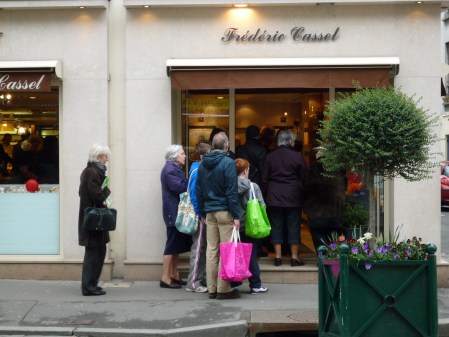
There are five distinct areas in the shop: the first displays petit fours, individual cakes and, of course, the obligatory macaroons.

Cassel does all the standard macaroon flavours plus some more unusual ones as well. Pictured below are the Punch Creole and Pina Colada macaroons alongside the more usual chocolate and raspberry:

I picked up a selection which included the aforementioned Punch Creole (rum an pineapple?) and Pina Colada (looks like coconut?) varieties alongside chestnut and chocolate to savour at leisure over a cup of coffee:

And to serve after dinner later that evening, a box of pâtisserie to share between 9 of us so it’s not as greedy as it looks:

You come next to the counter displaying savoury canapés, beautifully arranged, miniature works of art. Planning a picnic in the forest we weren’t in the market for dainty cocktail snacks but the most beautiful “oeufs surprise” served in their own eggshells, trimmed and cleaned so neatly, caught my eye. The pastel blue Cotswold Legbar eggs we find at home in the UK would look stunning given this treatment.
Cassel also makes a range of breads, croissants and other viennoiserie. There are clearly some lucky folk who call in regularly for their breakfast pastries and daily baguette.
The final area of the shop is devoted to whole large pâtisserie items – stunning fruit tarts and layered gateaux, and also to Cassel’s range of hand-made chocolates.
Here are the Easter items on display on the right hand side of the shop:

You walk out of the shop with pride clutching your precious purchases displayed in Cassel’s chic orange and brown packaging – the French couture experience all for a few Euros.
And the verdict on the cakes we brought home? Stunning, pure flavours, crisp pastry, light as air fillings. Truthfully I think the whole macaroon search for new flavours has got a little out of hand – eyes closed I would have recognised the chocolate flavour from our selectionbut the other three (chestnut, Pina colada and Punch Creole) were pretty much indistinguishable. Maybe the tried and tested flavours are the best and there’s no need for variety for its own sake.
Contact details
Frédéric Cassel
71-73, rue Grande
77300 Fontainebleau
Tel +33(0)1 64 22 29 59
Swiss food in London
January 18, 2010 § 1 Comment
After the New Year’s Eve feast (see previous post) it was our turn to rustle up a meal for 14 (6 adults, 8 children) on New Year’s Day. We’d prepared in advance by doing all the shopping, except for the salad ingredients, in Switzerland. Even the bread came from a lovely bakery in Zürich airport terminal. Swiss wine, an essential component of the meal, would have been too heavy to carry so we’d arranged an advance delivery to our hosts’ address by UK wine merchant Nick Dobson Wines. Nick is a man after my own heart who specialises in wines from Austria, Switzerland and Beaujolais. I’ve bought a number of items from him over the years both for home consumption and as gifts and he’s been really efficient, helpful and knowledgeable every time, plus supplied some really enjoyable wines so I would definitely recommend him if you are looking for something unusual. I give his contact details below at the end of this post.
Our Swiss themed menu was:
Bündnerfleisch (dried cured meat from Graubünden) – a mixture of beef and venison
Mixed salad
Cheese fondue
Bündner Nusstorte (caramel walnut pie from Graubünden)
We indulged in a bit of judicious cheating (or careful purchasing depending on your point of view!) and brought back from Klosters a bag of ready grated weighed and blended cheese for the fondue and the Nusstorte too. I give recipes both for cheese fondue and Nusstorte below if you want to have a go at home. Both recipes have been tried and tested more than once back home in the UK.
Our Bündnerfleisch came from an artisanal manufacturer in Klosters, a little shop on the main Landstrasse road close to the Heid ski lift. Bündnerfleisch is salted and cured meat, usually beef but we bought the venison version as well – similar but darker red with a background gamey flavour. The raw meat is first salted and mixed with a secret recipe of herbs and spices before being hung up to dry for several weeks. The meat is then pressed into a distinctive rectangular shape before being very thinly sliced and served. Bündernerfleisch is similar to the better known Italian bresaola which itself comes from the nearby Valtellina.
The people who run the Klosters business very kindly showed me round their processing and drying rooms where I was able to sea the beef pieces maturing slowly in the rafters:

You can read more about Bündnerflesich by following this link: http://www.grischuna.ch/productsE.html. I just wish we could get hold of it more readily over here as it’s delicious.
This was a really easy meal to feed a crowd of people, fun for both grown-ups an children. Neither the truly authentic Bündnerfleisch nor a pre-prepared Nusstorte are readily available here but you could easily substitute a platter of other cured meats and procure a tart from your local bakery to recreate the idea. Here is the grown-ups’ table (the riotous childrens’ table is just next door).

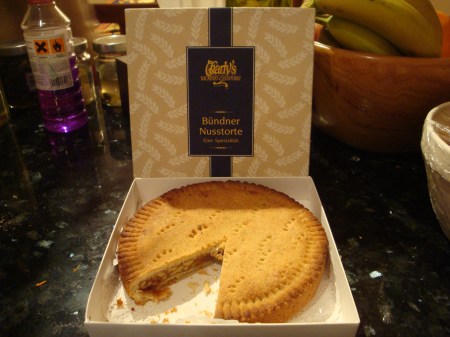
And here’s the beautiful Nusstorte fresh (well almost) from Charly’s in Klosters:
Recipe for cheese fondue “moitié-moitié” (half and half)
This recipe comes from my trusty little Betty Bossi Swiss Specialities cook book, a little ringbound volume with one recipe per page, clear simple and instructions and a photo of every dish. The half and half in the recipe title refers to the mixture of 2 cheeses used in this fondue. This recipe serves 4 people generously.
Ingredients
600g day-old bread from a cob or chunky baguette type of loaf (you need the right ratio of crust to crumb – a tin loaf would give too much crumb) cut into cubes
300g mature gruyère cheese
300g vacherin fribourgeois cheese (substitute emmental if vacherin fribourgeois is not available)
300 ml white wine, ideally a Swiss chasselas, otherwise whatever dry white wine you have to hand
1 peeled clove of garlic left whole
1 small glass (liqueur glass) of kirsch
1 tablespoon cornflour
a pinch each of freshly ground black pepper, paprika, freshly grated nutmeg
Grate the cheese using a coarse grater and place into the fondue pan. A traditional fondue pan is referred to as a caquelon. If, like me you bought a ready grated fondue mix of cheeses, simply tip the contents of the packet into the fondue pan. In a separate bowl, mix together the cornflour and white wine. Pour the mixture over the cheese in the fondue pan. Place the pan over a low heat and slowly bring the mixture up to boiling point, stirring constantly with a wooden spoon. Add the whole garlic clove, kirsch and seasoning to the mix. Once the mixture is smooth, creamy and bubbling, bring the fondue pan to the table and set your table burner on low. You are now ready to serve. Give the bottom of the pan a stir every so often with a bread cube on the end of your skewer to stop the cheese crust which forms on the base (known as la religieuse) from burning.
Recipe for Bündner Nusstorte
This recipe comes from a little ringbound paperback “Bündner Landfrauen Kochen” (Graubünden farmers’ wives cookbook) and was submitted both by Mrs Annina Mengiardi of Ardez (Swiss German version) and by Mrs Marta Padrun of Lavin (Romansch version) so it is certainly authentic. My Romansch is limited but as far as I can tell, the recipes are identical. The translation from Swiss German is mine as are one or two additions. I’ve made the recipe twice now so can confirm that it works. The sweet pastry dough is a little difficult to handle so be gentle with it. Caramelising the sugar for the filling has to be done carefully as well. The key thing is to seal in the filling thoroughly otherwise it bubbles out when baked. A small slice of the pie is enough so on that basis the recipe would serve 12 people. It’s usually served on its own without cream or ice-cream and is just as good with a cup of tea or coffee as it is for pudding. I wonder if this is the European precursor to the American pecan pie?
Ingredients
300g plain flour
150g caster sugar
150g butter
1 egg, lightly beaten
pinch of salt
Filling
300g caster sugar
50 ml water
250g roughly chopped walnuts
200 ml double cream
1 dessertspoon of honey
Rub the butter into the flour to which you have added the pinch of salt until it resembles fine breadcrumbs. Stir in the sugar then the beaten egg and work into a dough handling as lightly as you can. Wrap and chill the dough for half an hour. Roll out 2/3 of the dough and use it to line a loose bottomed flan tin 24-26cm in diameter. Do not trim the excess pastry as you should aim to leave an overlap of 3 cm. Wrap and return the remaining pastry dough to the refrigerator while you prepare the filling.
For the filling, melt together the sugar and water in a heavy based saucepan and allow to caramelise to a brown colour. Add the chopped walnuts, cream and honey, stir well and allow to cool to room temperature.
Fill the pie base, then roll out a lid and place it over the tart. Seal the edges well. I recommend leaving the pie edges untrimmed at this stage as you can neaten up the edges after baking. Prick the surface with a fork all over decoratively if you like (see picture above) but don’t overdo it as the filling will leak out.
Bake at 220 degrees C for the first 10 minutes then reduce the heat to 180 degrees C and bake until the tart is a light golden brown (approx another 30 minutes.
Contact details for Nick Dobson Wines
Telephone 0800 849 3078
Burning calories in Paris
September 21, 2009 § Leave a comment
During my food-leaning weekend in Paris, I decided that I needed to burn a few calories as well as ingest them. My solution was to take an early morning run from my hotel in the Rue d’Arras on the Left Bank along the Seine then down through the Jardins de Luxembourg and back again through St Germain. This would make a pleasant change from my usual running route back home in Manchester when I swap the Seine for the Bridgewater canal and the Left Bank for Moss Side.
First stop was the Ile de la Cité and majestic Notre Dame thrillingly free of tourists at this early hour:
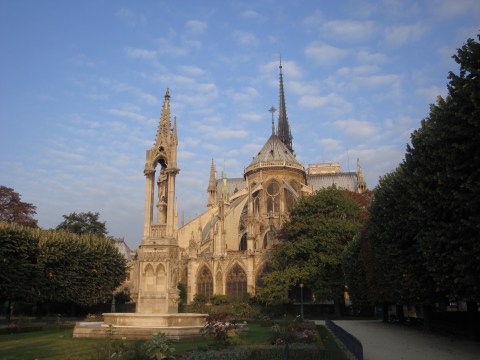
Just setting up on one of the Seine quais nearby was a Gascon food market filled with enticing looking goose-fat laden produce but sadly not yet open for business.

Crossing back onto the Left Bank I stumbled across the famous Maison Ladurée tearoom and pâtisserie in the Rue Bonaparte and couldn’t resist taking a picture of its over the top window display. Ladurée is quite an institution now, a marketing man’s dream as its website demonstrates http://www.laduree.fr/. I had a bit of a snigger at the whole section of the website devoted to the photos and life history of company President David Holder. That said, he and his father (who interestingly is the brains behind the Boulangerie Paul concept) have clearly built an impressive business on the basis of a single tearoom.

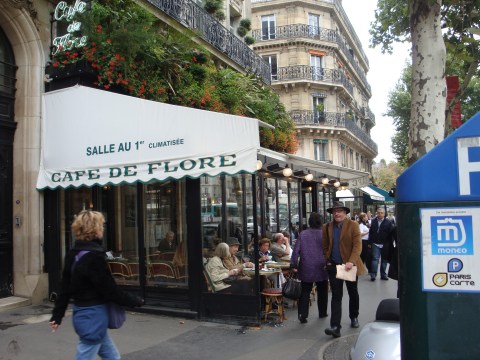
Returning along the Boulevard St Germain, now rather crowded with people looking at the bizarre sight of me, the lone female jogger dodging traffic and pedestrians, I spotted three famous gastronomic establishments. First, Brasserie Lipp, founded in 1880 by Léonard Lipp and now flagship restaurant of the Groupe Bertrand. How times change…

Just across the road are the Cafés Flore and Aux Deux Magots, both haunts of the existentialist and artistic crowd including Jean-Paul Sartre, Ernest Hemingway, Pablo Picasso and Simone de Beauvoir. Thousands of tourists (self included) throng their now sampling the nostalgia and hoping a little of the stardust will rub off.

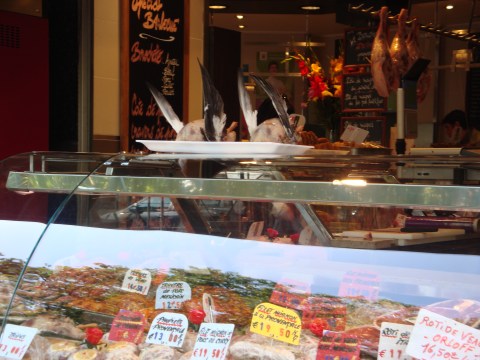
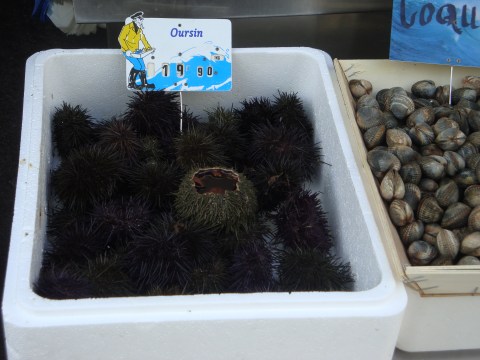
Just a little further along the Boulevard St Germain was an enticing collection of neighbourhood food shops: a fantastic looking butcher with ducks on display ready to take flight, a fishmonger with the freshest looking sea urchins for sale and cheese shop with an array of unusual regional cheeses:

How lucky to have such inspiring shopping on your doorstep – it beats the central Manchester offering of Tesco Metro or M&S food hall hands down!
I was on the home straight now as I turned into the Rue Monge but I stopped to photograph one final entrancing shop window, that of Le Bonbon au Palais, the sweetshop of your dreams:

Inside, there were tantalising glimpses of crystallised violets and rose petals and other goodies, all displayed in gorgeous glass jars. Not a branded plastic package in sight. A little bit of internet research reveals, pleasingly, that Le Bonbon au Palais is an independent shop which has delighted bloggers the world over. The website gives you a flavour of what to expect http://www.bonbonsaupalais.fr/.
Run over, it’s time for a well-earned breakfast.
A day in Paris with Clotilde Dusoulier
September 21, 2009 § Leave a comment
Well almost… Clotilde Dusoulier is the woman behind www.chocolateandzucchini.com which began as a cult food blog describing her adventures in a Parisian kitchen. Clotilde is now very much mainstream with a book deal and international press recognition the end result.
I’d read one of Clotilde’s articles describing a food lover’s tour of Paris in a copy of “Delicious” magazine two years ago. I cut out and kept that article thinking it might well come in handy and so it finally did. My aunt, who lives in Paris, chose to celebrate her 70th birthday this weekend with a Wild West party (more of this later). This was the opportunity I needed to hop on the Eurostar and spend a day in Paris with Clotilde at my side.
I was staying on the Left Bank just off the Boulevard St Germain so Clotilde’s suggestion of a visit to Bread & Roses for breakfast fitted the bill nicely. Bread & Roses is a bustling, bright bakery with a small café situated on a corner of the Rue Madame near the Jardin du Luxembourg. I took a seat amongst the morning joggers, breakfast meeting businessmen and chic post-school run Parisian mothers and ordered breakfast.
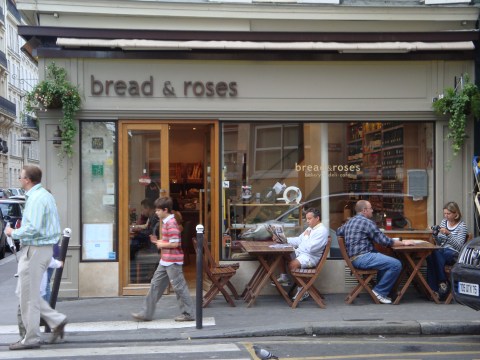
I chose freshly-squeezed orange juice, Darjeeling tea rather than coffee (24 hours after leaving home I was longing for a decent cup of tea) and a whole Brioche a L’Ancienne. What a wonderful breakfast! Everything just perfect: the juice freshly squeezed in front of me, the tea freshly brewed from leaves rather than a bag far superior to anything I’ve had in the UK for ages, and the brioche to die for – pillowy soft and buttery. I couldn’t finish it as you are given a whole loaf – it’s really designed for two people or more to share. I ended up giving my other half to a tramp on the Boulevard St Michel.

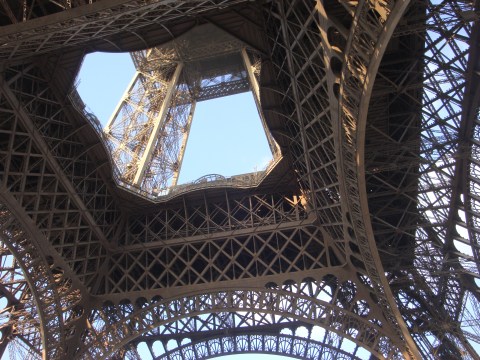
Set up for the day, it was time to visit a Parisian market. Clotilde’s suggestion of the market on Avenue Président Wilson meant I could take in the Eiffel Tower:
The market itself was more like an outdoor art installation rather than a place to buy food. Fish, meat, cheese, charcuterie and fruit and vegetable stalls were lined up for a kilometre or so along the centre of the Avenue Président Wilson, all a feast for the eye. I was arrested first of all by a magnificent swordfish:

I was next stopped in my tracks by Joel Thiébault’s astounding vegetable stall. Thiébault is France’s first celebrity greengrocer, a Gallic Greg Wallace if you can imagine that and I was pleased to see he was there in person sweet-talking customers. Acres of greenery, rainbow chard, carrots in four different colours, all of them shouting Buy Me! So I did – I bought a kilo of mixed tomatoes – no ordinary tomatoes but green ones, red ones, yellow ones, large, small, melon shape – some weird-looking purple potatoes and bunches of basil, chives and chervil. I was banking on having the chance to throw together a couple of salads as my contribution to the Wild West party later that evening.
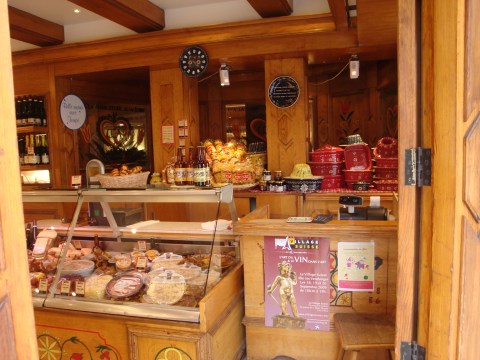
Reluctantly I left the market – after all I was on a tight schedule today – and headed back on the métro in a southerly direction heading for food shop Beau et Bon which describes itself as “l’épicerie folle”. Intriguing. Walking along the rue des Volontaires heading for the rue Lecourbe I couldn’t help but notice that there are food shops everywhere in Paris. Here is a cosy looking Alsatian deli, Tempé, on the corner of Volontaires and Vaugirard:
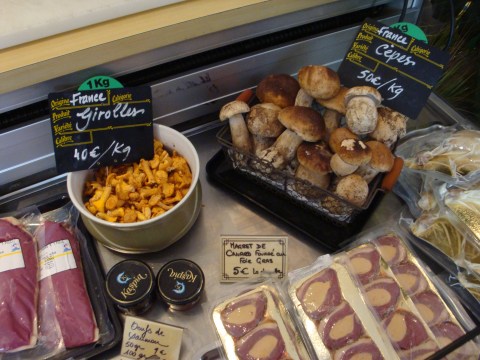
And a little further down the street I was seduced by the foie gras and wild mushrooms on display at Le Comptoir Corrézien:
Whilst on the corner I couldn’t help but stop and stare at the cubist cake displays at prestigious urban pâtisserie Lenôtre:

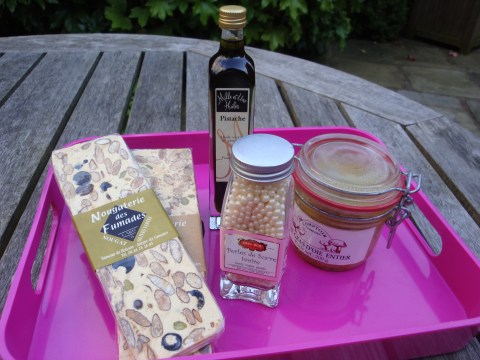
I finally made it to Beau et Bon on rue Lecourbe. The shop is tiny with shabby chic appeal and is crammed full of interesting things to eat. Owner Valérie Gentil’s (perfect name!) unique selling point is that she puts on sale the fruits of her gastronomic “Tour de France” each year. You will find within Beau et Bon not the standard cheeses, pâtés and biscuits you might pick up at Charles de Gaulle airport but lovely, unusual and sometimes frankly wacky items. I picked up a dinky bottle of deep green pistachio oil destined for a special salad dressing, two bars of nougat flavoured with green olives and chestnuts respectively, some gorgeous edible pearls for sprinkling over special cupcakes, and a jar of Breton kéramel for spreading on warm toast for breakfast. I couldn’t carry any more!
Here are my Beau et Bon and Comptoir Corrézien goodies safely book at home. Breton kéramel already consumed I’m afraid!
Thank you Clotilde for the tour of Paris – I’m now inspired to start work recommending a food tour of my home city of Manchester..
Bread & Roses
62, Rue Madame
75006
01 42 22 06 06
M° Rennes
Marché Avenue Président Wilson
From Place d’Iéna to Alma Marceau
Wednesdays and Saturdays
Tempé Specialités Alsaciennes
196 Rue Vaugirard
75015
01 45 66 87 38
M° Volontaires
Comptoir Corrézien
8 rue des Volontaires
75015
01 47 83 52 97
Lenôtre
61 rue Lecourbe
75015
01 42 73 20 97
Beau et Bon
81 rue Lecourbe
75015
01 43 06 06 53
M° Volontaires ou Sèvres Lecourbe
 The Rhubarb Fool