
The best beach bars in the world? Las Tapitas at Petit Bôt and Fermain Bay
August 16, 2009 § Leave a comment
Within an hour of landing on Guernsey for our summer holiday, this was the view that greeted as we strolled from our cliff-top hotel, the Bon Port on Guernsey’s rugged south coast to the small but beautifully formed Petit Bôt bay for lunch at beach cafe Las Tapitas.

Las Tapitas is run by a friendly and efficient Portuguese team and they serve a good range of tapas as well as sandwiches and their own wood-fired pizza at lunchtime. We ordered chorizo and peppers, meatballs in tomato sauce, sardines and grilled vegetable salad. The food is fresh and hot, competently prepared, arrives quickly and is good value. What more can you ask at lunchtime?

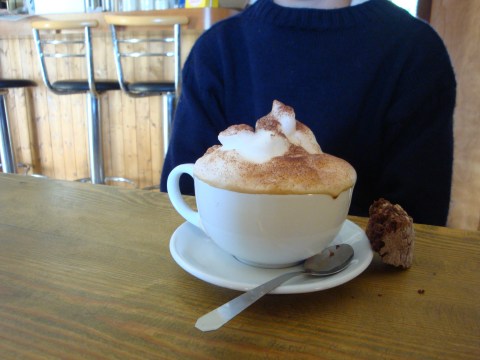
A range of dense custardy Portuguese puddings were on offer but we restricted ourselves to ice cream (oddly Mövenpick rather than Guernsey but nevertheless good), and excellent coffee – the foamiest cappuccino ever – served with delectable home-made chocolate biscotti.
Las Tapitas takes some beating, but the Fermain Bay Café, just 2 miles south of St Peter Port definitely gives it a run for its money. The location is stunning:

The café is open all day and the menu which changes daily offers a tempting choice of drinks, cakes, and meals based on fresh local seafood from lunchtime through to evening.
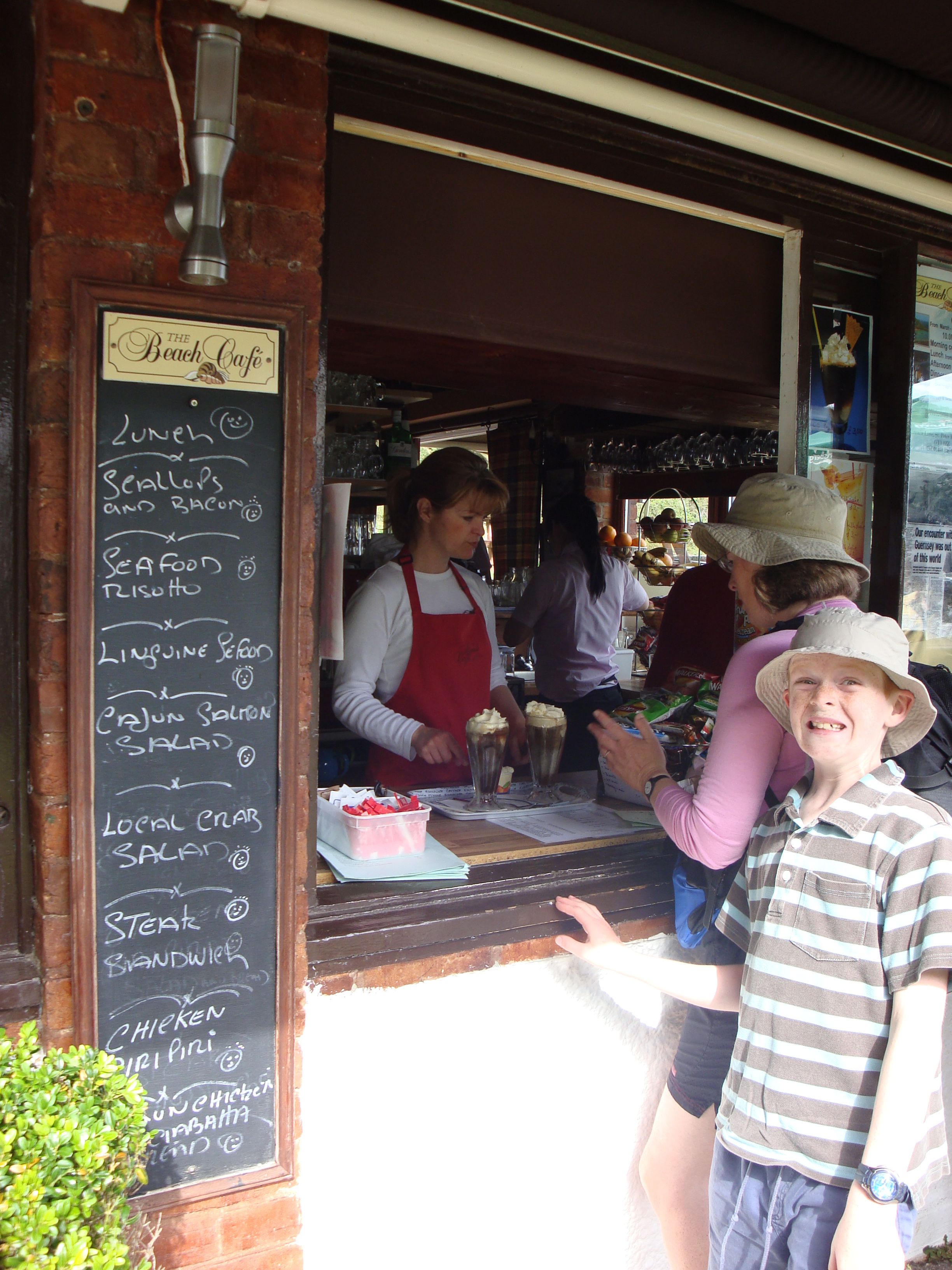
We opted for mid-afternoon iced coffees and a swim before continuing on our coastal walk to St Peter Port.

We lingered as mid-afternoon melted into early evening and as we finally departed the first wave of the St Peter Port office crowd were arriving for drinks after work. What an idyllic place to be a bank clerk…
Return to the home of Sticky Toffee Pudding
August 8, 2009 § 5 Comments
Our good friends Simon and Penny were over from Hong Kong for a couple of weeks in August and threw a small party at their house in the Lake District, Ormathwaite Hall on a Saturday 8 August. I offered to bring Sticky Toffee Pudding as my contribution to the catering.
The meal began with plenty of champagne – Simon is a very generous host – accompanied by crudites and dips. Another friend and excellent cook Shelley had prepared a delicious lamb tagine served with couscous.
My sticky toffee pudding with served with extra sticky toffee sauce and ice cream finished things off pretty well and guest numbers being larger than anticipated, it was served in mercifully tiny portions – just right to finish off the meal.
The prepared pudding is shown below fresh out of the oven at home. It is very easy to transport, doesn’t need refrigeration and reheats beautifully so is a perfect choice for taking to a party in advance.

Sticky Toffee Pudding can be found on menus all over the Lake District, from where it originates, and indeed all over the UK and beyond all year round. Jane Grigson is one of my favourite food writers and is a consistently reliable source of information. In her book “English Food” she reminds us that Sticky Toffee Pudding is by no means an ancient traditional English pudding but was devised by Francis Coulson who opened the Sharrow Bay Hotel in Ullswater in 1948. The Sharrow Bay can lay claim to being the first country house hotel and Francis Coulson’s recipes are generous in their use of butter and cream: his sticky toffee pudding recipe is no exception.
The recipe I use comes from one of chef/Lake District hotel proprietor John Tovey’s books with one modification of my own – the use of soft fudgy Medjool dates rather than ordinary ones. The grated orange zest in the sauce really lifts the flavour in a subtle way and cuts through the sugar and syrup. I’m afraid I don’t know which of John Tovey’s books it comes from – my copy of the recipe was dictated to me over the phone by my mum some years ago so all I have is a list of ingredients and brief manuscript notes in my personal recipe book.
Recipe for Sticky Toffee Pudding
Ingredients
For the pudding
4 oz butter
6 oz soft brown sugar
4 eggs
8 oz sr flour
8 oz Medjool dates
1 tsp bicarbonate of soda
2 tbsp camp coffee essence
10 fl oz boiling water
For the topping
2 tbsp double cream
3 oz soft brown sugar
2 oz butter
For the sauce
8 oz golden syrup
few drops vanilla essence
2 oz butter
2 oz soft brown sugar
Grated rind of 2 oranges
2 tbsp double cream (optional)
9”-10” lined square tin; 180C 350F
Cream the butter and sugar together, then beat in the eggs. Fold in the flour sifted with the bicarbonate of soda. Add the dates. Dissolve the coffee essence in the boiling water and pour into the mixture. Beat until mixed. Pour into the tin and bake for 1 ½ hours.
To make the topping, combine the ingredients in a saucepan and bring to the boil. Pour over the cooked pudding and brown under a hot grill.
To make the sauce, melt all the ingredients together in a small saucepan. Serve with chilled pouring cream or vanilla ice cream as well as the toffee sauce.
Cordials for Summer
August 5, 2009 § Leave a comment
Making elderflower cordial has become an annual event in our household with the arrival of the heady scented elderflower blooms in June heralding the beginning of summer. I first tasted elderflower cordial at the smart London wedding of our friends Tim and Laura Davis some 17 years ago. At last, a refreshing non alcoholic drink to suit an adult palate! I’ve been drinking it every summer since and have now settled on my favourite recipe which I discovered in Thane Prince’s slim but inspiring volume “Summer Cook”.
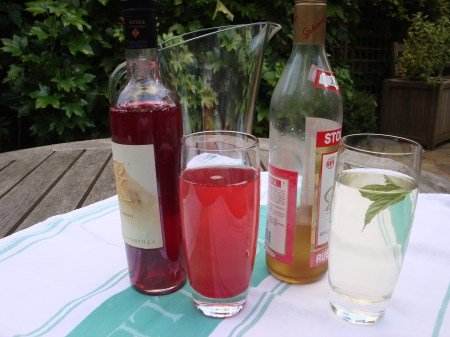
This year, inspired by the taste of the perfumed scarlet syrup remaining after making a summer pudding I tried out a new addition to the range – raspberry and redcurrant cordial. Diluted with ice cold still or sparkling water they make lovely summer drinks and making your own is less expensive and more satisfying than buying a pricy branded bottle from the supermarket.
I am pleased to say I have been asked for the recipe for both cordials this year. The recipes follow, as does a picture below. You will see that I recycle old wine and spirit bottles when bottling the cordial. The Stolichnaya is not all it seems…
Recipe for elderflower cordial
Ingredients
1 kg (2.25 lb) sugar
1.8 litres (3 pints) water
2 well scrubbed lemons
2 well scrubbed oranges
about 20 large elderflower heads
60g (2 oz) citric acid
Note on citric acid: this is becoming increasingly difficult to find but the more old-fashioned kind of chemist will usually have some in stock or be prepared to order it for you. Citric acid is used both as an aid to injecting heroin and also in the manufacture of the explosive HMTD so be prepared to answer the pharmacist’s questions when you go in to buy it!
Make a sugar syrup by dissolving the sugar in the water in a preserving pan and boiling for 5 minutes.
Chop the whole fruit into 2.5 cm (1 inch) chunks and add to the hot syrup along with the flowerheads. Do not wash the flowerheads, just shake out any insects. Stir in the citric acid, cover the pan and leave in a cool dark place for 4 days to infuse. Strain off the syrup (I do this using a muslin lined sieve) pour into spotlessly clean bottles and cap.
I have found that the cordial has improved keeping qualities if pasteurised. This is simple to do. Place the uncapped bottles in a preserving pan filled with water. Bring to boil then simmer for 15 minutes. Cap bottles while still hot.
Recipe for raspberry and redcurrant cordial
This is my own invention which I put together after checking out a few recipes I found on the web for various fruit cordials.
Ingredients
5lb mixed redcurrants and raspberries
granulated sugar
water
2-3 lemons
Put whatever quantity of fruit is available to you into an appropriately sized pan. I used approximately 5 lb fruit in total, 2/3 redcurrants and 1/3 raspberries. Just cover with water and boil gently for 15 minutes. Don’t boil for too long or too fiercely otherwise you will end up with a jelly rather than a cordial. Allow to cool and strain off the liquid. Measure the liquid back into a clean pan. Add 1/2 lb sugar and the juice of 1 lemon for each pint of liquid. Bring the mixture to the boil, stirring to dissolve the sugar, then boil for 3 minutes. Pour into sterilised bottles. Store in a cool dark place. Pasteurise if you like by standing the filled uncapped bottles in a preserving pan filled with water then bringing the water to the boil, allowing it to simmer for 15 minutes and capping the bottles while still hot.
Danger lurks in the woods
August 3, 2009 § 3 Comments

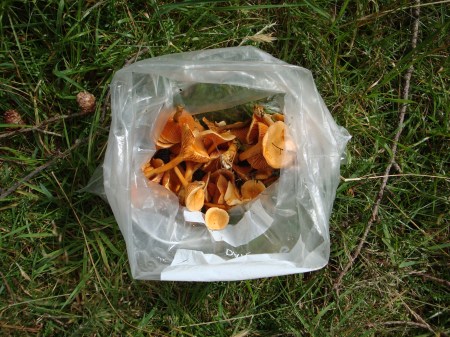
On the final leg of a Lake District walk along the far side of Buttermere I was delighted to spot the egg yolk yellow of what I assumed were chanterelles emerging from deep green moss. Eagerly I filled a small bag with the perfect little specimens below:
We ended the walk with a celebratory ice-cream at nearby Syke Farm in Buttermere village where they make delicious and unusual flavours from their own herd of Ayrshires. Blackcurrant cheesecake flavour was definitely a winner. They don’t have their own website but further details about the ice cream and Syke Farm tearoom can be found at http://www.explorelakedistrict.co.uk/detail_to_see.php?v_id=72
Back home that evening I thought I would double check my wild mushrooms against the photo and description in my trusty Collins gem Mushrooms book. After a few minutes I was dismayed to discover that I’d gathered a bagful of false chanterelles. These are marked “POISONOUS: A minority suffer from sickness and hallucinations”. Oh dear. They were quickly consigned to the dustbin and I was relieved to have escaped unharmed. I was mindful of the widely reported story of how Scottish “Horse Whisperer” author Nicholas Evans became seriously ill in September 2008 after mistaking a deadly cortinarius mushroom for the prized chanterelle. The little Collins book is really helpful as an identification guide as long as you pay attention to each section: the key piece of information in my case was habitat: I’d gathered my mushrooms beneath larches in acid-soiled woodland, a classic false chanterelle habitat whereas the true chanterelle grows mainly amongst broad-leaved trees, only occasionally amongst pine.
I was rewarded with a solitary real chanterelle a week or so later which I discovered on the wild fringes of a Lake District country house garden. I’m going to keep the exact location secret as chanterelles are thin on the ground! The perfect thing to with a single chanterelle is to cut it into neat small dice, fry it quickly in hot butter and serve it alongside creamy scrambled egg on toast. A perfect combination.
Breakfast in Afghanistan
July 28, 2009 § 1 Comment
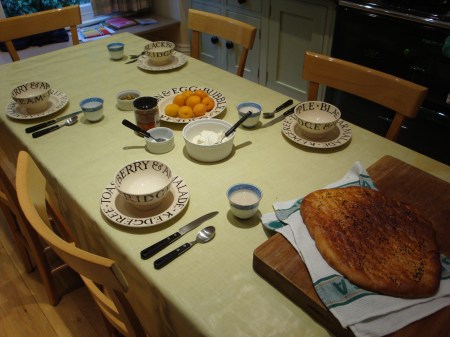
Breakfast is a big event in our household but lately the house breakfast of bacon, fried egg, Mediterranean fried bread and baked beans has seemed a little staid and over familiar. Earlier this summer we (me, husband Tim and sons George and Arthur) hit upon the idea of eating our way through breakfasts of the world beginning with A for Afghanistan and working our way through all 100 and odd countries on George’s flag poster right through to Z for Zambia.
What do Afghans eat for breakfast? First stop Amazon whence Helen Saberi’s helpful and concise book “Afghan Food & Cookery” published by Hippocrene was swiftly despatched.
The national drink is tea, chai, and Ms Saberi says “it is consumed in great quantities and I must say both the green and black tea are excellent”. I was tempted by the extraordinary sounding recipe for qymaq chai tea with clotted cream but in the end opted for a green tea flavoured with cardamon, with added sugar and milk.
NeverthelessI can’t resist quoting a paragraph on qymaq chai which is “a special tea prepared for formal occasions, such as engagements or weddings. It is made with green tea and by the process of aeration and the addition of baking soda the tea turns dark red. Milk is added (and sugar too) and it becomes a purply-pink colour. It has a strong rich taste. Qymaq, the luxury cream-like product is floated on the top. My husband, who is very poetic and very homesick, likens the color of the tea to the rosy-hued glow of the mountains in Afghanistan as the sun rises or sets. The qymaq represents the white snowcapped peaks.”
How’s that for a weird sounding brew and a great bit of purple prose!
With our standard Afghan tea we ate Roht, a round sweet flat bread which Ms Saberi says is often eaten for breakfast with tea or hot milk. The recipe is given below. Some apricots (Ms Saberi notes that the Panjshir valley is particularly noted for its apricot trees), pistachio nuts (for which the region of Herat is famous) and thick plain yoghurt completed the meal.
The end result was a fragrant and unusual breakfast and as a result I am tempted by many of the other recipes in Ms Saberi’s book, for example aush pasta with yogurt, chickpeas, kidney beans and minced meat on page 82 and the intriguing-sounding abrayshum or silk kebab on page 256.
Next stop for breakfast Albania – can’t wait!
Recipe for Roht – Afghan sweet flatbread
This recipe comes from Helen Saberi’s “Afghan Food & Cooking”. Ms Saberi attributes the recipe in turn to her friend Aziza Ashraf. I learned something new about the nigella seeds or sia dona which I quote: “These small black seeds, which can be bought under the name kalonji in an Asian grocery, are a confusing item because some people call them black onion seeds although they have nothing to do with onions. They are also confused with caraway seeds. Another mistake is to call them black cumin seeds, as true cumin seeds come from a different plant. Sia dona come from the plant Nigella sativa and are sometimes called nigella seeds.”
Ingredients
1 and 1/2 pounds (5 and 1/4 cups) all purpose flour
2 level teaspoons of baking powder
1 pack quick rise yeast
1/4 tsp ground cardamom
3/4 cup vegetable oil
1 and 1/2 cups sugar
3/4 cup warm water
1 egg, beaten
1 level tablespoon yoghurt
sia dona (nigella seeds)
sesame seeds
Mix together the flour, baking powder, yeast and cardamom. Warm the oil in a small pan, then add to the flour and rub together for a few minutes. Add the sugar to the warm water and gradually add to the flour, mixing well. Now add the egg (reserving a little for glazing) and the yogurt. Mix well and knead into a quite soft dough for about 5 minutes. Cover with a cloth and leave in a warm place for about an hour or so.
Meanwhile preheat the oven to 425 degrees F.
Divide the dough into two and roll out each on a floured surface into a round of about 1/2-inch thickness. Prick all over with a fork, glaze with the reserved egg and sprinkle the top with the sia dona and sesame seeds according to your fancy.
Place on a slightly oiled or greased baking tray and bake in the hot oven for about 15 minutes until risen, golden brown and cooked through. (If the top is browning too quickly, turn down the heat and cook on the lower heat for a little longer.)
Remove from the oven and place in a warm tea towel or plastic bag to stop the bread drying out too much.
 The Rhubarb Fool