
Review of Jamie’s American Road Trip Channel 4 TV series
October 7, 2009 § Leave a comment
Watched the final programme in “Jamie’s American Road Trip” last night. He kicked off in Los Angeles for the first programme in the series on 1 September and concluded 6 weeks later on a Navajo reservation in Arizona. There’s a whole host of food programmes on the television at the moment – too many to contemplate watching all of them – I’d rather be cooking than slumped on the sofa! But I picked this series to watch because I’ve developed a healthy respect for American cooking since picking up David Rosengarten’s fantastic book “It’s All American Food”. Previously, I’d assumed American food was all peanut butter and jelly, McDonald’s and Taco Bell. How wrong can you be. I’d gone in search of a recipe for “Real Southern Cornbread” to serve with a Tex Mex chilli for a party – David Rosengarten came up with recipes that worked brilliantly for both in this comprehensive book. It has no photos but the recipes are detailed and they work and the seductive text draws you in and before you know it you’ve journeyed across America from Southern Breakfast Biscuits with Sausage Cream Gravy to Malasadas (Portuguese-Hawaiian Doughnuts) taking in Pho (Vietnamese Beef Soup with Herbs) and Extra-Crispy Potato Latkes along the way.
There is a similar ambition behind Jamie’s American Road Trip I think – an attempt to debunk the myth that American food means junk fund, and to show the diversity of American food brought about by a melding of different immigrant cuisines with that of the indigenous peoples.
The series succeeded up to a point but was a slightly odd mix of travelogue, anthropological study and cookery demo – think Alan Whicker meets meets Desmond Morris meets Fanny Craddock. I must say I found some of the faux inpromptu meetings a little improbable – Jamie receives a supposed off-the cuff invitation to a Mexican family party in Los Angeles (programme 1/6). “That’s Family..!” chunters Jamie for all the world like an extra from East Enders.
And that underground restaurant evening he threw in his New York apartment (programme 3/6). We were led to believe that these were just a few random punters who’d found Jamie’s word-of-mouth invite on the internet. But the crowd who turned up were a group of sleek, self-satisfied incredibly beautiful and well-groomed group of New Yorkers – straight out of central casting I don’t doubt.
Also the closing credits each week listed the cast of thousands supporting Jamie on this apparently solo trip. In particular, there were several food stylists – what on earth is a food stylist and how have I managed without one for so long? So, the picture of a lone traveller in a car was a fiction, but I enjoyed the series anyway. Jamie’s heart is in the right place and his tastebuds are sound.
But if you are really interested in buying a book that gives an insight into American Food, don’t buy Jamie’s glossy coffee table but get hold of a copy of David Rosengarten’s instead.
Clonter opera picnic: what to eat with Rigoletto
October 5, 2009 § Leave a comment
Our friends Emma and Andrew organise a trip to Clonter Opera each October for an ever-increasing group of friends and neighbours. Clonter is the Cheshire equivalent of Glyndebourne and strikes a harmonious balance between serious music-making and jolly social occasion. Clonter specialises in giving young singers fresh out of conservatoire a leg-up in establishing their careers. For example, we heard New Zealand bass baritone Jonathan Lemalu at Clonter a few years ago and he’s now made quite a name for himself as an up-and-coming artist.
Enough of music and onto the serious business of the food. What the Clonter audience usually does is arrive at 6.30 and unpack hampers onto the tables provided in the barn seating area for drinks, canapés and first course. The performance then starts at 7.30 with a 70 minute long supper interval, just long enough for main course and pudding. We’re old hands now and know there is never time or appetite for cheese or coffee so we cut the stress and don’t bother with these now.
We were a group of 19 this year and Emma asked me if I might do some platefuls of nibbles to hand round which would serve both as canapé and as first course without the need to be formally seated. Nice idea but allowing 5 items per person and rounding up, this would necessitate making 100 canapés which is a tall order for a busy Saturday afternoon. I set myself the additional challenge of theming the canapés with the opera which was Rigoletto.
The opera is set in Mantua and was given its first performance in Venice. There is plenty of drama in Verdi’s dark tale of debauchery and deception but it is light on frivolous drinking and feasting scenes. The dreadful climax of the opera comes when court jester Rigoletto realises that the body in the sack he is about to hurl into the river is not that of the evil Duke of Mantua, but that of his beloved only daughter Gilda.
A few minutes mulling over the opera plotline and I came up with the idea for Northern Italian finger-food featuring miniature filo pastry sacks. Is this in poor taste and taking theming a little too far? Yes probably but I’m afraid that is how my mind works…..
Anyway without dwelling overmuch on my foibles, the chosen canapé menu was:
Stuffed olives. Waitrose do some gorgeous large Kalkidis (sic) olives stuffed with fruit compôte – not entirely authentically Italian but nevertheless very good. Surely these should be spelt Halkidikis or at the very least Kalkidikis? Looks like a syllable has gone missing. Maybe I’ll write to Waitrose to point this out.
Twists of parma ham artfully spiralled around rustic breadsticks – both elements picked up at favourite local shop Goose Green Delicatessen
Bruschetta with Gorgonzola dolce, walnuts and slices of fresh pear (painstakingly dipped in lemon juice to stop them going brown)
Mozzarella, tomato and basil bites – individual buffalo mozzarella bocconcini balls threaded onto a cocktail stick with a mixture of red and yellow cherry tomatoes and a single perfect folded basil leaf
All the above were pretty straightforward to put together – essentially an assembly job with deli ingredients. The pièce de résistance was to be the Mantuan miniature filo pastry sacks – Mantuan because of the chosen filling of roast butternut squash, sage and parmesan. I visited Mantua on a tour of Northern Italy a few years ago now. Its most famous dish is Tortelli di Zucca – ravioli filled with pumpkin, served with a simple sauce of sage-flavoured butter. I took inspiration from this dish for my sacks. Butternut squash is a pretty good substitute for the local Mantuan pumpkin having the necessary sweetness and depth of flavour once it’s been given the roasting treatment. I cut the squash into chunks and tossed them in a tablespoon or so of olive oil into which I’d thrown a few snipped purple sage leaves from the garden and some sliced garlic cloves, then baked them in the oven for about an hour. My baked squash became intensely savoury before being incorporated into the filling for the filo pastry sacks.
Here is the beautiful orange squash ready to go into the oven:

And here are the finished canapés ready for serving on our Clonter picnic table. All disappeared in a fraction of the time they took to prepare.
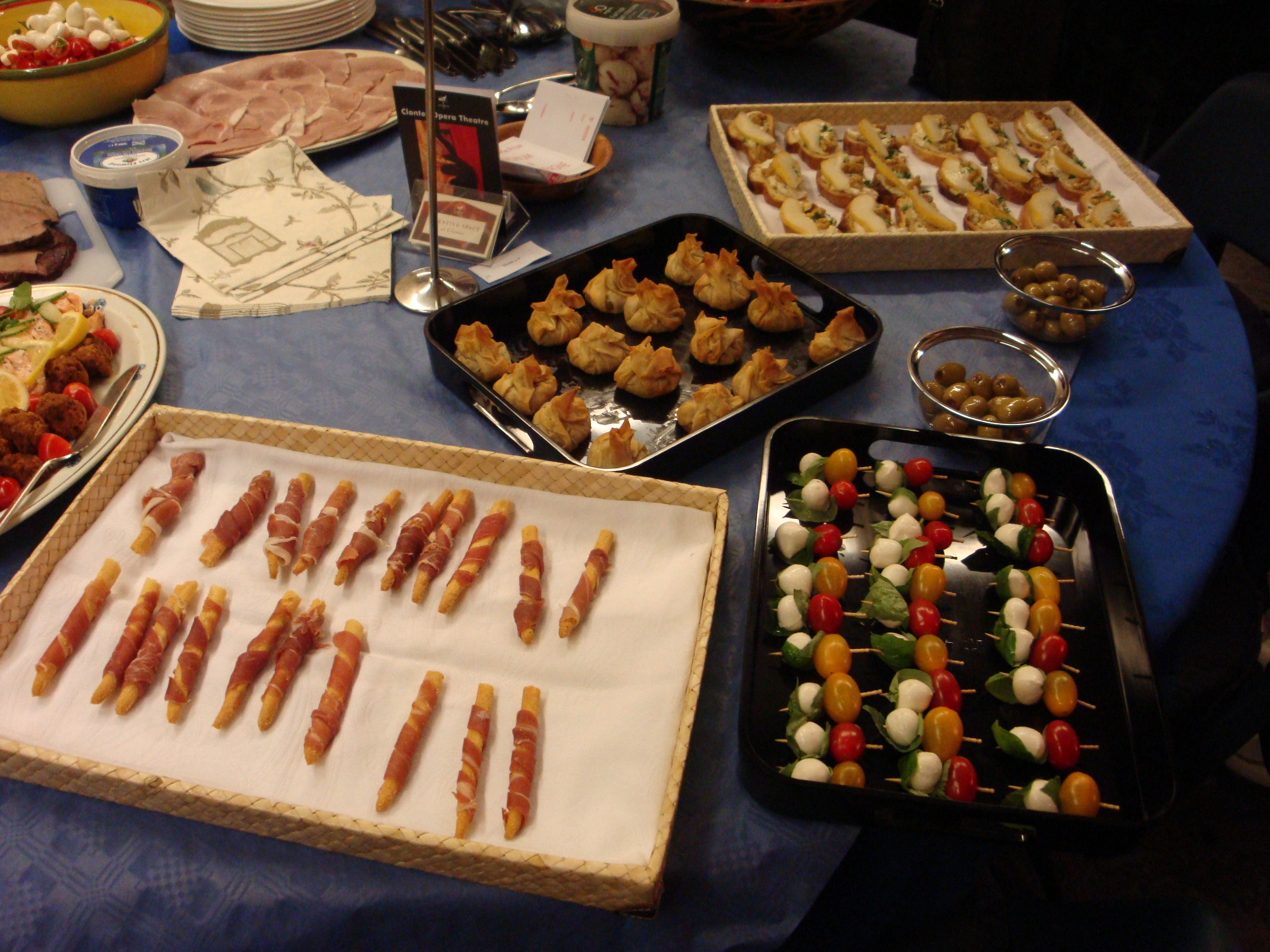
Almost forgot to mention that the performance of Rigoletto was a triumph – fantastic singing and inspired casting. One of the best performances I’ve seen in ages.
The recipe of my own devising for the Mantuan filo pastry sacks follows. These would have been best served warm but were in fact still pretty good at room temperature having been transported from kitchen to Clonter.
Recipe for Mantuan filo pastry parcels
Makes 20 parcels
Ingredients
1 medium butternut squash, peeled, deseeded and cut into 1 inch chunks
8-10 sage leaves, roughly chopped
3 cloves garlic, chopped
2 tablespoons light olive oil
Sea salt and freshly ground black pepper
1 egg yolk
1/2 teaspoon freshly grated nutmeg
2 oz finely grated parmesan or grana padano
270g pack filo pastry sheets
2 oz melted butter, maybe more if required
Make the filling. Peel, deseed and chop the squash into chunks. In a large bowl, toss the chunks with the oil, sage and a little salt and pepper and tip the whole lot onto a shallow baking tray lined with baking paper to avoid the squash sticking. Bake at 200 degrees C until the squash is cooked through and is become deliciously slightly charred and toasty round the edges. Don’t take it too far – you are looking to intensify the squash flavour, not burn it.
Let the baked squash cool a little then tip it into a roomy bowl and go in with a crinkle-cut chip cutter to reduce the squash to a chunky not too smooth purée. Add the cheese, nutmeg, and egg yolk, mix, then taste and adjust seasoning if necessary. If you are concerned about eating raw egg yolk, do the tasting bit before mixing in the egg yolk.
Now form the parcels. Melt the butter in a small pan and allow to cool a little. From memory, the pastry packet contains 10 large sheets folded pastry. Begin by cutting these 10 sheets neatly in half to make 20. Put aside and cover 10 of these half sheets and work with the other 10. Filo pastry is very thin and dries out quickly so you need to keep covered what you are not using in the next few minutes. Cut your ten half sheets in half again to make 20 smallish squares.
For each parcel, take 2 squares and lay them out on a pastry board. Brush each square scantily with melted butter and lay one one on top of the other at a 90 degree angle to create a rough star shape. Place a generous teaspoon of the squash filling in the centre and pick up and roughly twist the pastry together to create a sack or money-bag effect. Dab the formed parcel with some additional melted butter. Place the completed parcel onto a metal baking sheet. Continue until you have 10 parcels then gauge whether you need some more melted butter and repeat the process with the other half of your pastry.
Bake the parcels at 180 degrees C for 15-20 minutes until the pastry is golden brown and becoming crisp in parts. Cool on a rack.
Michael Pollan’s book In Defence of Food
October 4, 2009 § Leave a comment
I had half an hour to kill between meetings earlier this week and that was how I came to be browsing the food and cookery section in University bookshop Blackwells on Oxford Road. I was thinking of adding a glossy coffee table book on the food of Venice to my already too-large collection of cookery books but decided to choose instead Michael Pollan’s slim paperback “In Defence of Food” .
I am so pleased I did. I’d heard of the book before when listening to Radio 4’s Food Programme but wasn’t sure what to expect. What I got was a compelling and well written read on the subject of what we should eat now to be healthy and escape the problematic elements of the Western Diet.
Pollan condenses the answer to the question he poses at the very beginning of the book: Eat Food. Mostly plant based. Not too much. Sounds simple doesn’t it? And the point Pollan makes is that it is simple and that we should learn to go back to what we already know about food, trust our instincts and not be swayed by the over-simple one-track nutrition messages.
The low fat message is an example Pollan singles out for attention in the chapter he calls “The Melting of the Lipid Hypothesis”. He concludes that the 30 year public health effort focusing on a single dietary goal – the reduction of fat in our diet – may well have made our health worse. This is because the hypothesis on which the dietary advice was given – that dietary fat is responsible for chronic disease – is at best simplistic and at worst just plain wrong. I’ve always instinctively shied away from the advice that we should eat fewer eggs – after all what could be wrong with choosing a boiled egg (supposedly bad because of its cholesterol levels) for breakfast rather than a bowl of high sugar high salt cereal (but of course able to make the magic low fat claim). And I have never willingly eaten margarine because I think butter tastes better, naturally distrusting the health claims made by margarine manufacturers.
So it is gratifying to read Pollan dissecting the lipid hypothesis, delicately pointing up the scandalous irony that it is the trans fats in margarine, the so-called “healthy alternative” touted to us all these years that is the real villain. Pollan summarises this idea as follows” the principal contribution of thirty years of official nutritional advice has been to replace a possibly mildly unhealthy fat in our diets with a demonstrably lethal one”. Hear hear!
So what does he mean by Eat Food? Pollan distinguishes between real food and food -like substitutes and gives tips on how to distinguish between them. As a guide, he suggests that we should avoid eating food products with more than five ingredients on the label. To illustrate his point he lists in full every ingredient in a loaf of Sara Lee Soft & Smooth White Bread – all 37 on them! It reads like a rather scary kind of poetry.
What about his advice that diet should be mostly plant based? Pollan runs through the by now familiar evidence that a healthy diet should be plant based but is objective enough to admit that we don’t necessarily know all the reasons why that should be the case. The good news is that some meat in the diet is OK, especially if we choose meat and dairy product from grass fed animals. One of Pollan’s points is that everything is linked – yes, you are what you eat, but what you eat is also what it eats – so an egg from a free-range hen eating a mixed diet is a very different thing from a battery product.
Pollan delivers his advice in a light and funny manner. Who wouldn’t smile on being told “Don’t get your fuel from the same place your car does”? He recognises the irony of an American lecturing the world on how to eat better. He’s never high-handed and earnest, yet his book is nevertheless soundly researched and based on good science as far as I can tell. Blimey, he even manages to get the Daily Mail on his side as a review on the back cover indicates!
This is essentially an optimistic book as Pollan reminds us that the best choices for our health also happen to be the best choices for the planet. As he says “That these also happen to be the most delicious choices is very good news indeed”.
With that thought in mind, I’m going to enjoy a boiled egg and real bread soldiers for breakfast now!
Wild West Party in Paris
September 22, 2009 § Leave a comment
My aunt’s 70th birthday bash on Saturday night was the raison d’être for my trip to Paris this weekend so I’d better say a few words about the main event. The party had been organised by Auntie Madge’s lovely group of friends who go under the name of the Golden Girls. They’d done her proud putting on a Wild West party (exactly why they chose this theme remains a mystery) complete with line dancing, a Clint Eastwood look-alike, friends and family from around the world, and of course lots of lovely things to eat and drink.

My own contribution was a couple of very simple salads put together from my purchases at Joël Thiébault’s beautiful market stall earlier that day (see previous post). People often try too hard when asked to prepare something for a party – there are too many stars of the show – stunning terrines, tarts, three-bird roasts and the like and not enough simple salads. I decided to put this right and threw together very quickly at my aunt’s apartment before the party a simple potato salad dressed with olive oil and white balsamic vinegar. What made it special was the purple potatoes I’d used plus generous quantities of herbs – chervil and chives. I also sliced up the motley bag of tomatoes I’d bought earlier, dressing them with olive oil, basil, salt and just a touch of lemon. I’m gratified to say that both salads disappeared pretty quickly.

Here is an attractive way of serving a dip with crudités for a party. That French sense of style just can’t be held back.

I mentioned that there were friends and family from all over the world. My cousins Pierre and Alain are married to Meryanti (Indonesian) and Yuko (Japanese) respectively. I have a great recipe for Beef Rendang from Mery (as she is usually known) which I will share one of these days. Yuko is a fabulous cook and I will certainly be asking for some of her recipes too.
Yuko had pushed the boat out for the party and had come with a tray of what the French call verrines. I was horrified at first thinking this might be something to do with earthworms. The root of the word is verre – glass, not ver – earthworm and it turns out that verrines are dinky little shot-type glasses of filled with artfully constructed layers of delicious things to eat. Yuko is both practical as well as talented so her verrines were in fact made of disposable plastic (plasticines perhaps?). She’d filled them with layers of chopped prawns, fromage frais mixed with herbs and diced tomato.

It transpires that verrines are all the rage in France. There are whole books, devoted to them and they can inspire flights of fancy leading to obsession. Just have a look here for starters:
http://www.lesfoodies.com/recettes/verrine
and if that appeals, try this:
Enough of this aside on verrines. Not sure if they’ll catch on in the UK but if they do remember you read it first here!
My cousin’s wives Mery and Yuko really are from the far east (as opposed to Wild West) but stealing the show was second cousin Arthur who has reinvented himself as a Buddhist monk and now goes under the name Topgyal. The purple and saffron robes certainly look good at a party.

Sadly my sister Jane couldn’t make it over for the weekend but it was good to have the chance to catch up with my dad. Here we are both in matching cowboy check shirts, the cheat’s answer to fancy dress.
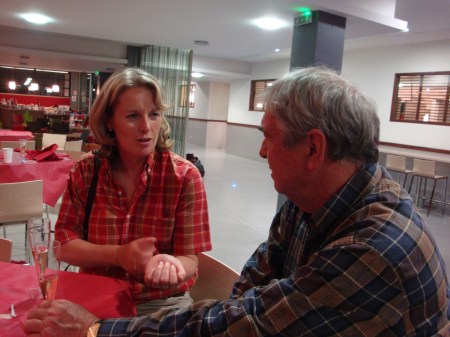
That’s the last of my Parisian posts – back home on Eurostar now with lots of new food ideas.
Burning calories in Paris
September 21, 2009 § Leave a comment
During my food-leaning weekend in Paris, I decided that I needed to burn a few calories as well as ingest them. My solution was to take an early morning run from my hotel in the Rue d’Arras on the Left Bank along the Seine then down through the Jardins de Luxembourg and back again through St Germain. This would make a pleasant change from my usual running route back home in Manchester when I swap the Seine for the Bridgewater canal and the Left Bank for Moss Side.
First stop was the Ile de la Cité and majestic Notre Dame thrillingly free of tourists at this early hour:

Just setting up on one of the Seine quais nearby was a Gascon food market filled with enticing looking goose-fat laden produce but sadly not yet open for business.

Crossing back onto the Left Bank I stumbled across the famous Maison Ladurée tearoom and pâtisserie in the Rue Bonaparte and couldn’t resist taking a picture of its over the top window display. Ladurée is quite an institution now, a marketing man’s dream as its website demonstrates http://www.laduree.fr/. I had a bit of a snigger at the whole section of the website devoted to the photos and life history of company President David Holder. That said, he and his father (who interestingly is the brains behind the Boulangerie Paul concept) have clearly built an impressive business on the basis of a single tearoom.

Returning along the Boulevard St Germain, now rather crowded with people looking at the bizarre sight of me, the lone female jogger dodging traffic and pedestrians, I spotted three famous gastronomic establishments. First, Brasserie Lipp, founded in 1880 by Léonard Lipp and now flagship restaurant of the Groupe Bertrand. How times change…

Just across the road are the Cafés Flore and Aux Deux Magots, both haunts of the existentialist and artistic crowd including Jean-Paul Sartre, Ernest Hemingway, Pablo Picasso and Simone de Beauvoir. Thousands of tourists (self included) throng their now sampling the nostalgia and hoping a little of the stardust will rub off.
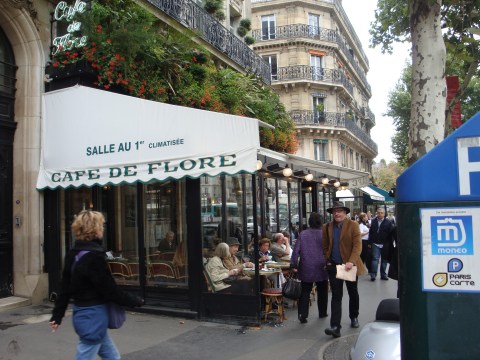

Just a little further along the Boulevard St Germain was an enticing collection of neighbourhood food shops: a fantastic looking butcher with ducks on display ready to take flight, a fishmonger with the freshest looking sea urchins for sale and cheese shop with an array of unusual regional cheeses:
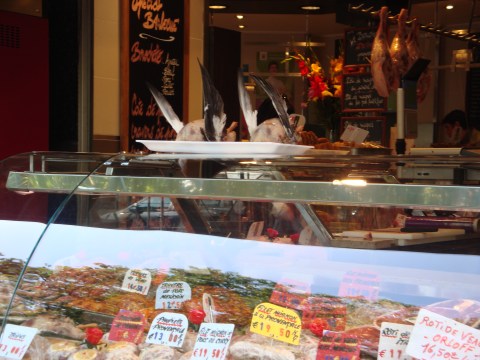
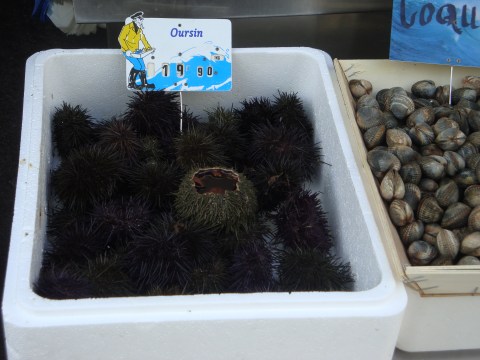

How lucky to have such inspiring shopping on your doorstep – it beats the central Manchester offering of Tesco Metro or M&S food hall hands down!
I was on the home straight now as I turned into the Rue Monge but I stopped to photograph one final entrancing shop window, that of Le Bonbon au Palais, the sweetshop of your dreams:

Inside, there were tantalising glimpses of crystallised violets and rose petals and other goodies, all displayed in gorgeous glass jars. Not a branded plastic package in sight. A little bit of internet research reveals, pleasingly, that Le Bonbon au Palais is an independent shop which has delighted bloggers the world over. The website gives you a flavour of what to expect http://www.bonbonsaupalais.fr/.
Run over, it’s time for a well-earned breakfast.
A day in Paris with Clotilde Dusoulier
September 21, 2009 § Leave a comment
Well almost… Clotilde Dusoulier is the woman behind www.chocolateandzucchini.com which began as a cult food blog describing her adventures in a Parisian kitchen. Clotilde is now very much mainstream with a book deal and international press recognition the end result.
I’d read one of Clotilde’s articles describing a food lover’s tour of Paris in a copy of “Delicious” magazine two years ago. I cut out and kept that article thinking it might well come in handy and so it finally did. My aunt, who lives in Paris, chose to celebrate her 70th birthday this weekend with a Wild West party (more of this later). This was the opportunity I needed to hop on the Eurostar and spend a day in Paris with Clotilde at my side.
I was staying on the Left Bank just off the Boulevard St Germain so Clotilde’s suggestion of a visit to Bread & Roses for breakfast fitted the bill nicely. Bread & Roses is a bustling, bright bakery with a small café situated on a corner of the Rue Madame near the Jardin du Luxembourg. I took a seat amongst the morning joggers, breakfast meeting businessmen and chic post-school run Parisian mothers and ordered breakfast.
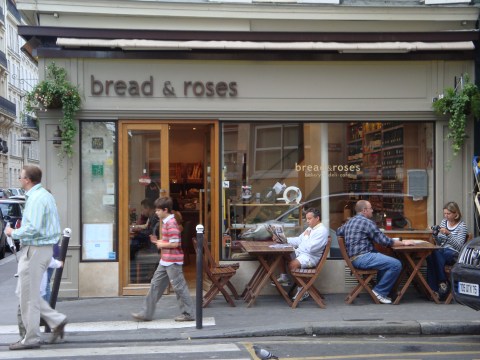
I chose freshly-squeezed orange juice, Darjeeling tea rather than coffee (24 hours after leaving home I was longing for a decent cup of tea) and a whole Brioche a L’Ancienne. What a wonderful breakfast! Everything just perfect: the juice freshly squeezed in front of me, the tea freshly brewed from leaves rather than a bag far superior to anything I’ve had in the UK for ages, and the brioche to die for – pillowy soft and buttery. I couldn’t finish it as you are given a whole loaf – it’s really designed for two people or more to share. I ended up giving my other half to a tramp on the Boulevard St Michel.

Set up for the day, it was time to visit a Parisian market. Clotilde’s suggestion of the market on Avenue Président Wilson meant I could take in the Eiffel Tower:

The market itself was more like an outdoor art installation rather than a place to buy food. Fish, meat, cheese, charcuterie and fruit and vegetable stalls were lined up for a kilometre or so along the centre of the Avenue Président Wilson, all a feast for the eye. I was arrested first of all by a magnificent swordfish:

I was next stopped in my tracks by Joel Thiébault’s astounding vegetable stall. Thiébault is France’s first celebrity greengrocer, a Gallic Greg Wallace if you can imagine that and I was pleased to see he was there in person sweet-talking customers. Acres of greenery, rainbow chard, carrots in four different colours, all of them shouting Buy Me! So I did – I bought a kilo of mixed tomatoes – no ordinary tomatoes but green ones, red ones, yellow ones, large, small, melon shape – some weird-looking purple potatoes and bunches of basil, chives and chervil. I was banking on having the chance to throw together a couple of salads as my contribution to the Wild West party later that evening.
Reluctantly I left the market – after all I was on a tight schedule today – and headed back on the métro in a southerly direction heading for food shop Beau et Bon which describes itself as “l’épicerie folle”. Intriguing. Walking along the rue des Volontaires heading for the rue Lecourbe I couldn’t help but notice that there are food shops everywhere in Paris. Here is a cosy looking Alsatian deli, Tempé, on the corner of Volontaires and Vaugirard:
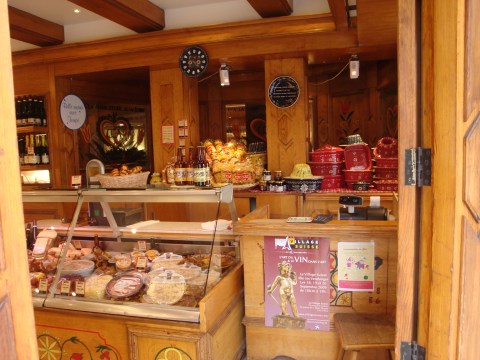
And a little further down the street I was seduced by the foie gras and wild mushrooms on display at Le Comptoir Corrézien:
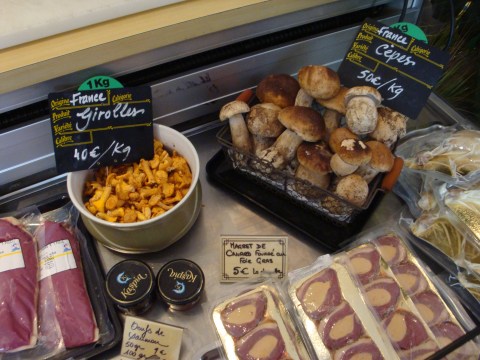
Whilst on the corner I couldn’t help but stop and stare at the cubist cake displays at prestigious urban pâtisserie Lenôtre:

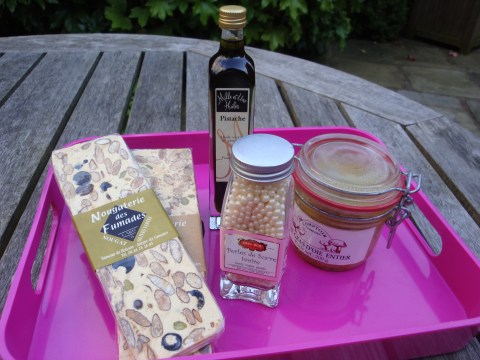
I finally made it to Beau et Bon on rue Lecourbe. The shop is tiny with shabby chic appeal and is crammed full of interesting things to eat. Owner Valérie Gentil’s (perfect name!) unique selling point is that she puts on sale the fruits of her gastronomic “Tour de France” each year. You will find within Beau et Bon not the standard cheeses, pâtés and biscuits you might pick up at Charles de Gaulle airport but lovely, unusual and sometimes frankly wacky items. I picked up a dinky bottle of deep green pistachio oil destined for a special salad dressing, two bars of nougat flavoured with green olives and chestnuts respectively, some gorgeous edible pearls for sprinkling over special cupcakes, and a jar of Breton kéramel for spreading on warm toast for breakfast. I couldn’t carry any more!
Here are my Beau et Bon and Comptoir Corrézien goodies safely book at home. Breton kéramel already consumed I’m afraid!
Thank you Clotilde for the tour of Paris – I’m now inspired to start work recommending a food tour of my home city of Manchester..
Bread & Roses
62, Rue Madame
75006
01 42 22 06 06
M° Rennes
Marché Avenue Président Wilson
From Place d’Iéna to Alma Marceau
Wednesdays and Saturdays
Tempé Specialités Alsaciennes
196 Rue Vaugirard
75015
01 45 66 87 38
M° Volontaires
Comptoir Corrézien
8 rue des Volontaires
75015
01 47 83 52 97
Lenôtre
61 rue Lecourbe
75015
01 42 73 20 97
Beau et Bon
81 rue Lecourbe
75015
01 43 06 06 53
M° Volontaires ou Sèvres Lecourbe
Weekend in Paris: Restaurant Hélène Darroze
September 20, 2009 § 2 Comments
My aunt who lives in Paris, Marjorie, was celebrating her 70th birthday with a Wild West party on Saturday 19 September and I decided to make a long weekend of it and take the opportunity to explore Paris.
I travelled to Paris in leisurely comfort taking the train all the way from our front door. It takes longer than the plane but is a comfortable and relaxing way to travel. I hopped onto the metro, breathing in the distinctive smell it has and positively enjoying the bustle and excitement of Paris. I checked into my cheap (for Paris..) and cheerful hotel, the Vendôme on the Rue d’Arras on the Left Bank and was very touched to find that husband Tim had thoughtfully sent a bouquet of flowers to the room.

There was just time to unpack, bathe and change before setting out to that evening’s destination, Restaurant Hélène Darroze on the Rue D’Assas, also on the Left Bank, a couple of metro stops away. You may have guessed that I thought my hotel was on the same street as the restaurant but I didn’t check carefully before booking and confused rr with ss. Never mind, I was approximately in the vicinity and the exercise did me good.
I was amused to catch on the TV in my room a few minutes of “Un Dîner Presque Parfait” (an almost perfect dinner) a reality TV show which is evidently the French equivalent of “Come Dine With Me”. The French contestants had taken the whole thing a lot more seriously than we do in the UK: in this week’s episode filmed in the lakeside mountain town of Annecy, hostess with the mostest Carole had recreated an alpine meadow by turfing over her dining table with real grass onto which were dotted toy animals and artificial flowers. You can check out the latest episode of the show here: http://undinerpresqueparfait.m6.fr
Suitably refreshed and in the mood for dinner after watching the lovely Carole prepare foie gras for her guests, I set out for Restaurant Hélène Darroze which is located on the discreetly affluent Rue d’Assas just off the bustling Boulevard Raspail.

It felt good walking in through the sleekly dark doorway and being shown in the Salon, the less formal (and less expensive) way to sample to cooking here. It had been surprisingly easy to book a table – I had phoned and booked in the main restaurant just 10 days’ earlier without any difficulty. A sign of the recession perhaps. Plan A, dinner for two (me and Auntie Madge) in the restaurant, changed to Plan B, dinner for three in the salon when we realised Cousin Eileen was in town. Eileen, like many members of my extended family has led a colourful life and is now married to a Turkish Cypriot and runs a beachside bar, The Soho Lounge, in a resort not far from Kyrenia.
As I was a little early and was the first to arrive, I settled down in the boudoir-like salon with a glass of Laurent Perrier rosé and took in the delicious sounding “Menu Tapas” realising with pleasure that there were no difficult decisions to make as all of these dishes would be served up during the course of the evening. The salon décor is a mix of funky minimalism (citrus green walls and dinky dark wood dining tables) and Arabian nights glamour (screen of butterfly wings and jewel-coloured silk cushions).
The Tapas menu is shown in the photograph below, along with the mildly eye-watering price of Euro 88 per head (in fact not unreasonable for Paris given the number of different dishes and sheer quantity of skilful cooking involved – to put this into context, a single main course of sea bass at the Restaurant Jules Verne on the Eiffel Tower is also coincidentally Euro 88, a spotted on the menu during next day’s sightseeing)

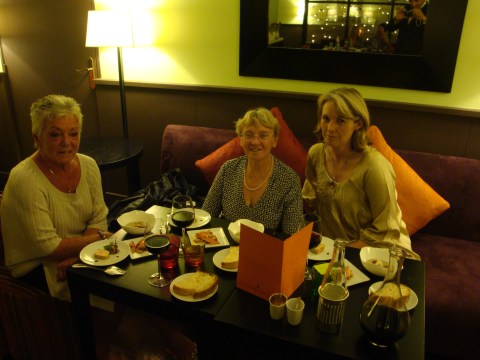
My fellow guests arrived and joined me in a glass of pink champagne. The waiters (all good looking sharp suited young men) were gently flirtatious and were happy to take our picture. Cousin Eileen is on the left, Auntie Madge in the middle and me on the right.
Why did I choose Restaurant Hélène Darroze? Because she’d appeared as an example of a top-class Michelin-starred chef on BBC’s Masterchef last year and had stuck in my mind as being quietly competent and observing the highest standards in the kitchen. I toyed with the idea of trying out Pierre Gagnaire’s restaurant but in the end thought I’d like to visit a restaurant run by a female chef. She is now in her early 40s, at the top of her game and, like Angela Hartnett before her, has taken over the running of the restaurant of London’s flagship Connaught Hotel.
I knew next to nothing about Darroze’s style of cooking before visiting the restaurant so this was all a new discovery. I now know that she is a native of Landes in South West France and this certainly showed in the cooking on the menu this evening.
The first course of 3 “tapas” comprised, transcribing from the photographed menu above:
Foie gras de canard confit au naturel, chutney de figue de chez ‘Pierre Bau’, réduction Mas Amiel
Haricots maïs du Béarn, homard bleu, olives Taggiashe, roquette
Ris d’agneau et kokotxas de morue en fricasseé aux noisettes fraîches, velouté d’artichauts bretons
Here’s what the dishes looked like when they arrived at the table:

As you can see, all the dishes were served in tiny portions, just right for a greedy person like me. I tend to like my plates and bowls round, finding the various square receptacles, wooden boards, jars and the like that modern chefs feel compelled to employ rather faddish. The delicate little shell shaped bowls that were used here were however rather lovely and suited the dainty nature of the food and portion sizes. Wine glasses I recognised as Riedel and felt good in the hand. We chose a Beaujolais (a Fleurie I think) as a cost effective and versatile wine which lasted all through the meal.
The course which stood out for me was the lamb sweetbreads – these were tiny morsels packed with flavour and were served with what the waiter informed us were the lower cheeks of a salt cod! Obscure this ingredient may the cheek too were dainty and delicious and worked incredibly well with the lamb and the velvety artichoke purée.
Next up were:
Riz acquarello noir et crémeux, chipirons, chorizo et tomates confites
Maigre de ligne, déclinaison de fenouil, moules de Bouchot et palourdes au jus d’herbes
Effiloché de poularde jaune des Landes, cèpes, espouma de pommes de terre
These dishes are in the next photograph:
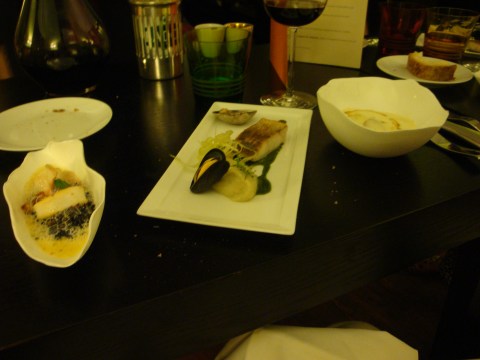
The rice dish was a refined take on the traditional Catalan black rice dish found on Barcelona restaurant menus, though Darroze prefers to use a type of Carnaroli rice from Italy as the waiter knowledgeably informed us. Chipirons turned out to be baby squid. The waiter was also helpful in explaining what maigre was – a fish native to the Atlantic Charentes Maritime coast, a little like a sea bass. Whilst chatting to us, he also solved the mystery of what bar and loup de mer are – both sea bass but the former is the name used for fish from the Atlantic coast and the latter the name used for Mediterranean fish.
On returning home, I looked up maigre in my trusty Jane Grigson Fish Book and was delighted to find that it was in there – just a couple of sentences but there nevertheless – she is a woman you can count on. Apparently this fish is known in English as a meagre or a croaker and is a bit like a gurnard. Hats off to Darroze for using something unusual and from her home region rather than the more obvious turbot or sole.
The menu French was getting a little up itself at this point – I mean, a declension of fennel! This turned out to be fennel three ways with the purée turning out to be a revelation – I made a mental note to try this it at home. And effiloché of chicken? This seems to have something to do with knitting or crocheting but turned out to be a delectable miniature chicken shepherd’s pie with the espouma or cheffy foam of potato being the lightest mash imaginable.
Finally, on to the puddings. These were:
Madeleine a l’huile d’olive, sorbet fromage blanc, salade de mûres et myrtilles, meringue au cassis
Crème au chocolat carapuno du Vénézuela, praline d’amandes fait maison et écume de thym citron
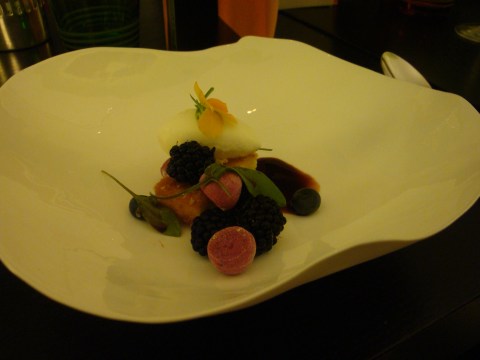
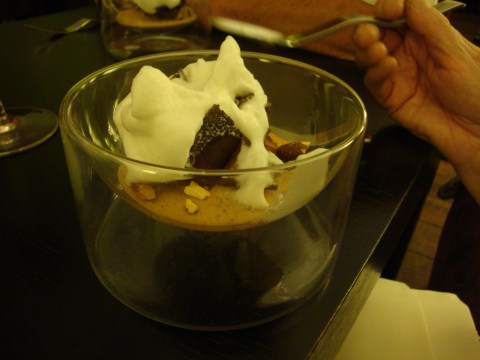
Both pretty as a picture and as good to eat as to look at. Sorry to be a pedant (actually I’m not sorry really) but I think the menu should actually describe the chocolate as Carupano rather than carapuno. Arthur Knapp in his 2008 book “Cocoa and Chocolate” describes the criollo beans from this part of Venezuela as “the finest in the world”. Nothing but the best for Darroze and they certainly made a heavenly mousse. I was not sure about the combination of lemon thyme (in another of those modish foams) with chocolate but both Madge and Eileen enjoyed the contrasting tastes. All this sounds positively gushing but it really was very good. Searching round for something negative to say, the sound of heavy duty machinery from the open plan kitchen, probably employed in whipping up those foams, was perhaps the only (slightly) jarring note during the evening.
The dinky little madeleine was served with the most amazing mini blackcurrant meringues that exploded in the mouth like a refresher. I would guess that they were not concocted from the usual egg white but from blackcurrant foam. A touch of the Heston Blumenthal, and a little culinary magic to end the meal.
Train picnic: dining in style
September 12, 2009 § Leave a comment
It was my birthday on Friday 11 September. Until recently this was not a noteworthy or memorable date and sadly it is now for all the wrong reasons. I chose to celebrate quietly this year by attending the finals of the Leeds Piano Competition. Music may be the food of love but I have been married to Tim now for 16 years and I need more solid sustenance. A picnic on the train as we journeyed across the heather-clad Pennines from Manchester to Leeds was the obvious solution.
Where to look for inspiration for this special picnic? First stop was New York Times food writer Amanda Hesser’s book “Cooking for Mr Latte” a chronicle, with recipes, of her courtship with future husband. Chapter 26 is entitled “Fine Dining in the Sky” and contains some excellent advice which is easily transferable to a train journey.
Hesser’s general advice is “the food must be compact and light, yet it cannot be skimpy. It must include favorite food like cheeses, cookies and olives, and it should in some way be lavish.” Suggestions to pack include salted nuts, especially delicious salted almonds from Spain, a chewy country roll and a nutty, soft cheese. Further recommendations are excellent cured meats, salads prepared with aged vinegars and nut oils, fresh herbs and homemade mayonnaise. Bought treats are suggested to complete the meal – a tart, cake or petit four or a caramel-filled chocolate.
Next stop was the unlikely sounding “Constance Spry Cookery Book”. Chapter XXXIV is “Menus, Parties and Food for Special Occasions and contains an apt little section headed “Train Food”. Who would expect that an English cookery book first published in 1956 could be such a repository of enticing food ideas?.
Ms Spry’s general advice about train food is as follows: “The primary qualification about such food is that it shall taste fresh and be really appetizing. It should never the bear the faintest trace of paper flavouring, something not so easy to avoid as one might think.”
She goes on to describe a delicious meal made by a family member for small party going up to “the far north” (Manchester? Scotland perhaps! the destination is never specified). It makes delectable reading:
“Each of us was handed when we got into our sleepers a small, neat cardboard box containing two little screw-top cartons and other small packages. In one carton was a perfect freshly made lobster salad in a delicious dressing, the second contained fresh fruit salad of peaches, strawberries, and orange. Crisp, poppy-seed-sprinkled rolls were quartered and buttered, and a Porosan bag held the crisp heart of a Cos lettuce. There were small cream cheese rolls made by taking two short pieces of celery, filling the hollow made when they were put together with cream cheese, and rolling the whole in brown bread and butter…”
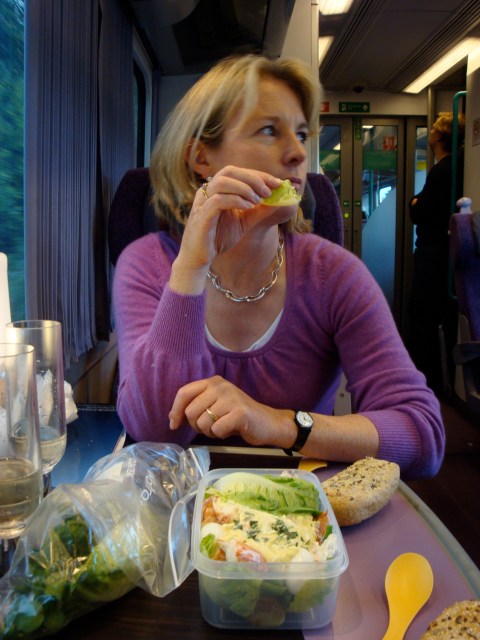
Suitable inspired, I made by own preparations. Visits to the deli and greengrocer provided me with Spanish salted almonds, extra large stuffed green olives and thinly sliced meltingly soft Bellota ham accompanied by crisp celery sticks and crunchy radishes. These would be served with chilled champagne to begin the meal. Next, I took my cue from Constance Spry and prepared a simple but delicious lobster salad, combining new potatoes, soft-boiled quail eggs and squeaky blanched green beans with the diced lobster meat. The whole lot was packed into a carefully lettuce lined food storage box and topped with a dollop of wobbly yellow homemade mayonnaise flavoured with lemon zest and a little chopped tarragon. Next was a ripe St Marcellin cheese served in its own dinky indivdual terracotta pot. I then put together my favourite simple fruit salad of sliced white nectarines in passion fruit pulp. A quick trip to the bakery provided us with fresh rolls and cherry and almond tartlets, which along with half a bottle of Chateauneuf du Pape completed the preparations. The whole lot was packed into a small wicker basket along with forks and a couple of glasses and we were off!
It was all just as good as it all sounds as I hope the pictures below demonstrate. It definitely beats the usual railway offering of a pack of peanuts and a curled-up pre-pack sandwich hands down!

Making use of the bumper harvest of British plums
September 12, 2009 § Leave a comment
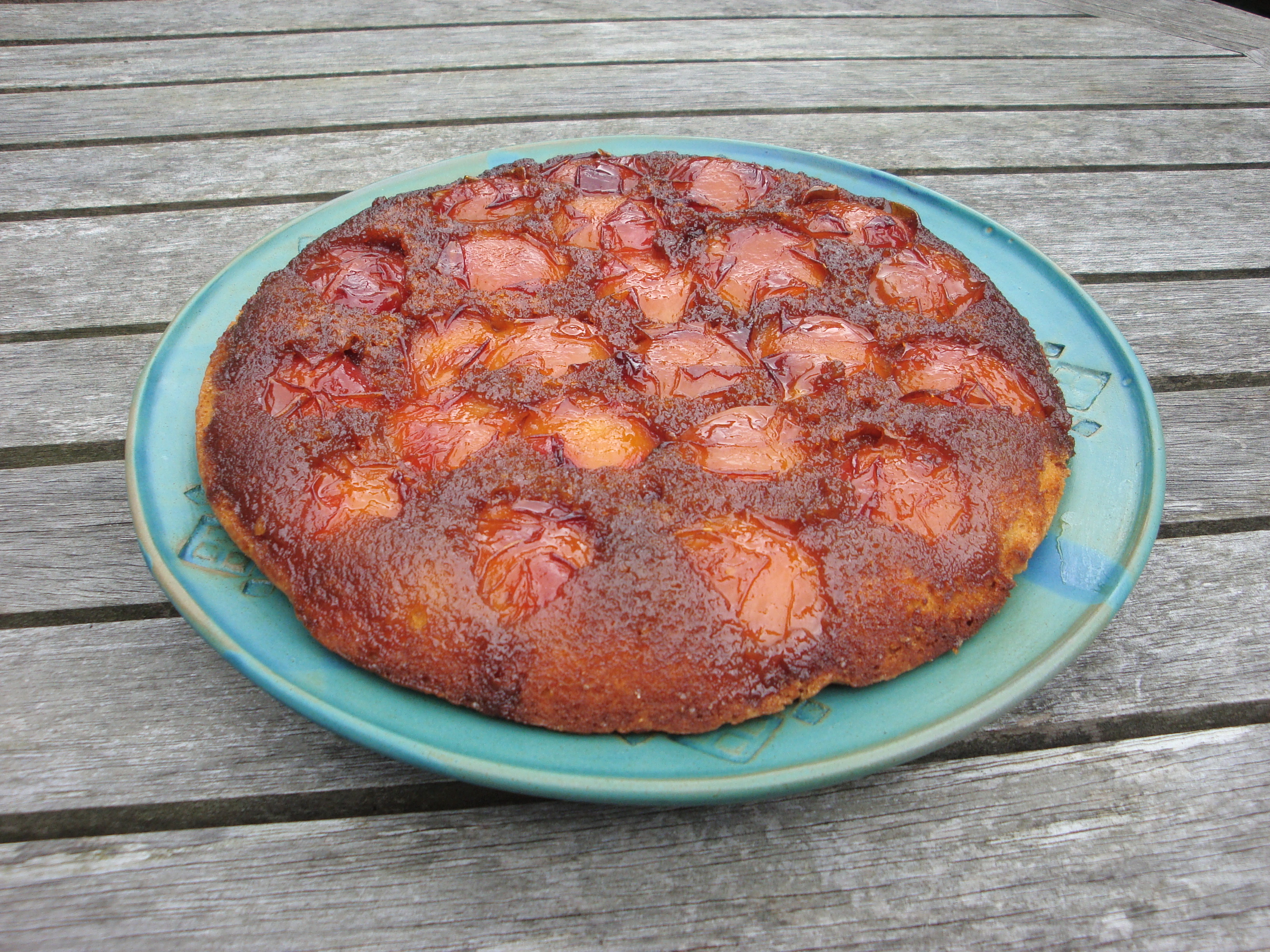
A story on BBC Radio 4’s Farming Today earlier in the week about this year’s bumper harvest of British plums prompted me to seek out some plums at the weekend and bake this fantastic upside-down plum cake from Aussie chef Bill Granger’s book “Bill’s Food”.
I really like Bill’s take on food, so much so that I have five of his books now and invariably the recipe I’m searching for is in the fifth book I look in. The recipes are fresh and uncomplicated and, unlike some glossy cookbook authors I might mention (yes I mean you Nigella and Nigel) all the recipes I have tried have worked first time.
Bill’s trick of using a frying pan in which to bake this cake is a neat one and I bet it would work just as well for a Tarte Tatin so I can cross off that Le Creuset Tarte Tatin tin from my wish list now and save valuable space in my kitchen.
Recipe for upside-down plum cake
Ingredients
Caramelised plums
1 lb 14 oz (850g) plums
1 3/4 oz (50g) butter, softened
4 oz (115g) caster sugar
1 tablespoon lemon juice
Cake
3 1/2 oz (100g) butter
8 oz (225g) caster sugar
4 eggs, separated
1 teaspoon vanilla extract
5 1/2 oz (155g) plain flour
2 teaspoons baking powder
1 teaspoon ground cinnamon
pinch salt (optional – especially as Bill specifies unsalted butter in this recipe whereas I invariably use slightly salted butter for most things)
Preheat the oven to 180 degrees C (350 degrees F/Gas 4). Use a sharp knife to slice the cheeks from the plums and discard the stones. To make the caramel, melt the butter in an ovenproof (ie not one with a plastic or wooden handle) 28cm (11 inch) frying pan over low heat. Add the sugar and lemon juice and stir until dissolved. Increase the heat and cook for 5-6 minutes, or until golden and caramelised. Transfer the plums to the pan and cook gently for 2 minutes.
To make the cake, cream together the butter and sugar until light and fluffy. Add the egg yolks, one at a time, beating well after each addition, then add the vanilla extract. Sift the flour, baking powder, cinnamon and salt over the mixture and beat until smooth. Beat the egg whites in a clean dry bowl until stiff (using an electric whisk for speed). Fold into the cake mixture with a metal spoon. Spoon over the plums in the pan, smoothing the surface with a spatula.
Bake for 40 minutes, or until a skewer inserted into the centre comes out clean. Leave to rest for a minute or so before carefully turning out and serving with cream or crème fraîche.
Serves 10-12
Obsessed by cauliflower
September 7, 2009 § Leave a comment

Obsessed by cauliflower? I can hear the incredulity in your question but, yes, it’s true.I listened to Radio 4’s Food Programme back in August whilst on holiday and heard Yotam Ottolenghi, founder of London’s Ottolenghi restaurant group, singing the praises of the humble cauliflower. This was one of a series of “Chef’s Choices” where 6 chefs picked their favourite ingredient. I was delighted that cauliflower had been chosen by a chef with a middle eastern background who could have chosen any one of a thousand exotic ingredients.
I believe that every vegetable can taste fantastic if it is cooked sympathetically. Cauliflower is a case in point. My abiding childhood memory of cauliflower is seeing a whole head of cauliflower boiled soggily in the pan, complete with enormous white grub…. yuck.
Cauliflower is really not at its best plain boiled when its brassica flavour can become overpowering. Easily overcooked, it can become mushy and unpleasant. Cauliflower does however, as Ottolenghi reminded us, take brilliantly well to spices. The spiced cauliflower fritters he prepared on the programme sounded absolutely mouthwatering. I’ve dug out the recipe and list it below along with some more from my own repertoire: another middle eastern fritter recipe from Claudia Roden’s much quoted “A New Book of Middle Eastern Food” together with a cauliflower salad from the same source, and a recipe for cauliflower with potatoes from Madhur Jaffery’s first BBC book “Indian Cookery”.
The programme interspersed clips of Ottolenghi in the kitchen with factual and cultivation details from a Lincolnshire based cauliflower grower. Cauliflower sales it seems are sadly in decline as cauliflower has been eclipsed by its sexier green cousin, broccoli. It’s definitely time to support our home grown caulis and free them from their blankets of gloopy cheese sauce!
Recipe for cauliflower and cumin fritters with lime yoghurt
Ingredients for lime sauce
330g Greek yoghurt
2 tbsp chopped coriander
Grated zest 1 lime
2 tbsp lime juice
2 tbsp olive oil
Salt and pepper
Ingredients for cauliflower fritters
1 cauliflower
120g plain flour
3 tbsp chopped flat leaf parsley
1 garlic clove crushed
2 shallots chopped
4 eggs
1.5 tsp ground cumin
1 tsp ground cinnamon
1.5 tsp ground turmeric
1.5 tsp salt
1. tsp black pepper
550 ml vegetable oil for frying
1. Put all the sauce ingredients in a bowl and whisk well. Taste – looking for a vibrant, tart, citrusy flavour – and adjust seasoning. Chill or leave out for up to half an hour.
2. Prepare the cauliflower, dividing it into florets. Add to a large pan of boiling salted water and simmer for 15 minutes or until very soft. Drain into a colander.
3. Put the flour, chopped parsley, garlic, shallots, eggs, spices, salt and pepper in a bowl and whisk into a batter. When the mixture is smooth, add the warm cauliflower. Mix to break down cauliflower into the batter.
4. Pour vegetable oil into a sauté pan – 1.5cm depth – and heat. When hot, spoon in generous portions of the cauliflower mixture, 3 tablespoons per fritter. Fry in small batches, controlling oil temperature so the fritters cook but don’t burn. They should take 3-4 minutes on each side.
5. Remove from pan and drain on a kitchen paper. Serve with sauce on the side.
Recipe for deep fried cauliflower with walnut tarator sauce
Ingredients for walnut tarator sauce
2 thin slices bread, crusts removed
120 g (4 oz) roughly chopped walnuts
150ml (1/4 pint) olive oil
1-2 tbsp wine vinegar (start with 1, taste and add more if required)
1 clove garlic, crushed
Salt and pepper
Ingredients for deep fried cauliflower
1 cauliflower
EITHER batter made with the following ingredients
OR egg and breadcrumbs
4 oz plain flour
1/4 pint water
1 whole egg, beaten
1 tsp ground turmeric
1 tsp ground coriander
1 tsp ground cumin
salt and pepper
Prepare the tarator sauce. Dip the bread in water and squeeze dry. Place in the bowl of a food processor with 1 tbsp of the vinegar, nuts, garlic and seasoning. Process, gradually adding the olive oil, until smooth. Taste, adding more vinegar and seasoning if required.
Wash the cauliflower and separate into florets. Boil in salted water until only just tender (5-10 minutes). Drain and allow to dry well. If using batter rather than egg and breadcrumbs, make the batter by tipping flour into a bowl, breaking an egg into a well in the middle and gradually whisking in the water to the egg and flour. Whisk in the spices, salt and pepper.
Dip the cooked florets in the above batter mixture (or egg and breadcrumbs) and deep-fry until golden, turning over once. Drain well. Serve with the tarator sauce.
You can also serve the tarator sauce with plain boiled or steamed vegetables such as green beans or courgettes. Hazelnuts can be substituted for walnuts but I think the walnuts work better with cauliflower.
Recipe for fennel, celery and cauliflower salad
1 small cauliflower
1 bulb fennel
3 sticks celery
Olive oil, lemon juice, salt and pepper
1-2 tbsp chopped fresh mint
Claudia Roden’s recipe suggests lightly cooking the vegetables to make an unusual salad but I prefer to use them raw.
Wash and prepare vegetables by cutting into bite-sized pieces. Either use the vegetables raw (my preference) or cook them in boiling salted water for a few minutes until only slightly softened.
Dress with plenty of olive oil, lemon juice , salt and pepper and the chopped fresh mint.
Recipe for cauliflower Waldorf salad
I dreamed up this salad to make use of the tarator sauce I had left over from the deep-fried cauliflower recipe. Take the salad vegetables from the preceding fennel, celery and cauliflower salad recipe, add 2 sliced eating apples, skin-on (red skin looks good). Dress with tarator sauce (from above deep fried cauliflower recipe) toss lightly and serve. The walnuts required for a Waldorf salad are of course present, ground, in the sauce.
Recipe for Cauliflower with Potatoes Phool gobi aur aloo ki bhaji
Serves 4-6
1/2 lb (225 g potatoes)
1 medium cauliflower (you need 1 lb (450g) florets)
5 tbsp vegetable oil
1 teaspoon whole cumin seeds
1 teaspoon ground cumin seeds
1/2 teaspoon ground coriander seeds
1/4 teaspoon ground turmeric
1/4 teaspoon cayenne pepper
1/2-1 fresh hot green chilli very finely chopped
1/2 teaspoon ground roasted cumin seeds
1 teaspoon salt
Freshly ground black pepper
Boil the potatoes in their skins and allow them to cool completely. (Day-old cooked potatoes that have been refrigerated work very well for this dish). Peel the potatoes and cut them into 3/4 inch (2 cm) dice.
Break up the cauliflower into chunky florets, about 1 1/2 inches (4 cm) across at the head and about 1 1/2 inches (4 cm) long. Soak the florets in a bowl of water for 30 minutes. Drain. ( I have frequently omitted this step and the recipe seems to work just the same without the faff of soaking and draining).
Heat the oil in a large, preferably non-stick frying pan over a medium flame. When hot, put in the whole cumin seeds. Let the seeds sizzle for 3-4 seconds. Now put in the cauliflower and stir it about for 2 minutes. Let the cauliflower brown in spots. Cover, turn heat to low and simmer for about 4-6 minutes or until cauliflower is almost done but still has a hint of crispness left. Put in the diced potatoes, ground cumin, coriander, turmeric, cayenne, green chilli, ground roasted cumin, salt, and some black pepper. Stir gently to mix. Continue to cook uncovered on low heat for another 3 minutes or until potatoes are heated through. Stir gently as you do so.
We eat this at home sometimes as an accompaniment to an Indian meal or more often as a midweek meal in itself along with brown rice and a cucumber raita.
 The Rhubarb Fool